
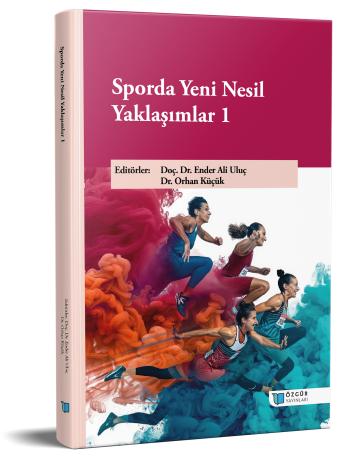
Innovative Teaching Approaches and Pedagogical Design Perspectives in Physical Education and Sport
Chapter from the book:
Uluç,
E.
A.
&
Küçük,
O.
(eds.)
2026.
New Generation Approaches in Sport 1.
Synopsis
The two most fundamental components shaping education are the student and the teachers. In order to sustain this dynamic at a high level and adapt to the global understanding of education, innovative instructional approaches and pedagogial design perspectives have increasingly been used together. While the 20th-century education system largely reflected a more restrictive view grounded in essentialist and perennialist principles, in which students assumed a relatively passive role, the 21st century has witnessed the development of educational systems thet emphasize active student participation, guided by the teacher as a facilitator and mentor, and encourage inquiry-based learning. This shift has led to the growing need for innovative teaching approaches.
As educational systems have evolved in this direction, physical education has also undergone significant transformation. Rather than focusing solely on the psychomotor domain, contemporary physical education has integrated cagnitive and affective domains into its instructional framework. Through this perspective, physical education and sport have gained a renewed orientation that supports students physical, mental and social development in a more holistic manner. A common feature of these instructional transformations is the emphasis on active student engagement.
Alongside innovative instructional approaches, pedagogical design plays a centrel role in determining appropriate learning methods, identifying suitable objectives and content and structuring assesment and evaluation processes in a coherent and systematic manner. Functioning as an integrated system, pedagogical design supports the organization of learning experiences in alignment with intended outcomes and ensures that process remains structured and effective. During the implementation of pedagogical design, students individual differences, readiness levels, age characteristics and learning preferences design becomes more effesctive when a meaningful connectional environment.
Within the context of physical education and sport, the integration of innovative instructional approaches with pedagogical design models enables the development of individualized plans tailored to each learner. This integration enhances students motivation to participate in lessons and contributes positively to their overall achievement levels.
How to cite this book
License

This work is licensed under a Creative Commons Attribution-NonCommercial 4.0 International License.
Published
DOI
Categories
Copyright (c) 2026 Ender Ali Uluç- Orhan Küçük; Yakup Yiğit- Adem Karatut- Taner Yılmaz- Zeynep Dikbaş- Yusuf Tekin- Ferhat Aktaş- Erdal Demir- Ali Fatih Sağlam- Emrah Barkın