
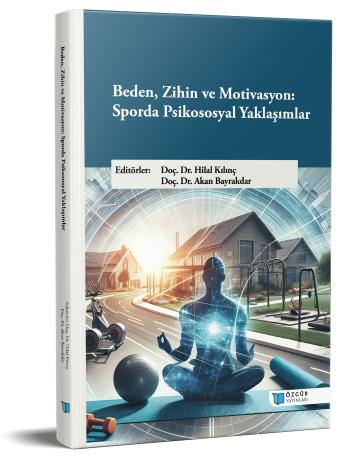
Psychosocial Effects of Participation in Padel: Social Connectedness, Motivation, and Psychological Well-Being
Chapter from the book:
Kılınç,
H.
&
Bayrakdar,
A.
(eds.)
2026.
Body, Mind, and Motivation: Psychosocial Approaches in Sport.
Synopsis
This chapter examines the psychosocial effects of participation in padel on individuals. Padel, played in pairs and requiring continuous communication, fosters intense social interaction among players. These features strengthen athletes’ sense of social belonging while enhancing group cohesion and team coordination. Moreover, padel with its recreational and enjoyable aspects, supports individuals’ intrinsic motivation and contributes to the sustainability of sports participation. Regular padel players may experience increased perceived social support, improved life satisfaction, and enhanced psychological well-being. In this context, padel stands out not only in terms of physical performance but also as an activity positively impacting social and psychological health. This chapter systematically addresses the relationships between the structural characteristics of padel, motivational processes, and psychological well-being, providing a meaningful contribution to the sport sciences literature.
Keywords:
How to cite this book
License

This work is licensed under a Creative Commons Attribution-NonCommercial 4.0 International License.
Published
DOI
Categories
Copyright (c) 2026 Hilal Kılınç- Akan Bayrakdar; Halil Orbay Çobanoğlu- Abdullah Yüksel- Muhammed Yavuz Kılınç- Akan Bayrakdar- Hilal Kılınç- Zeynep Ayça Terzioğlu