
From Archaeological Image to Artistic Production: The Experience of Original Printmaking in the Context of Archaeotherapy
Chapter from the book:
Öz Çelikbaş,
E.
(ed.)
2026.
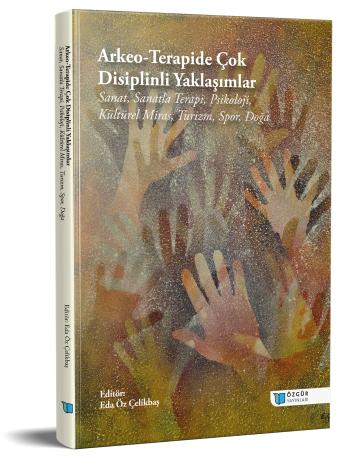
Multidisciplinary Approaches in Archaeotherapy: Art, Psychology, Cultural Heritage, Tourism, Sports, and Nature.
Synopsis
Contemporary urban life creates an intense lifestyle in which individuals are increasingly distanced from nature and artistic creation. Individuals living within the concrete fabric of urban areas often weaken their connection with art and limit their relationship with nature due to daily concerns about making a living. In this context, spaces where nature, cultural heritage, and art come together have the potential to reshape both the aesthetic and psychological experiences of the individual. This study examines the original printmaking application carried out within the scope of the workshop titled "Archaeotherapy: Subconscious Archaeology in Art Therapy" at the ancient city of Hadrianopolis in Eskipazar district of Karabük province. The workshop, which was open to the public and featured international artists, was primarily held within the boundaries of the ancient city, situated amidst breathtaking natural beauty. Archaeology, beyond being a discipline that makes visible the cultural memory through the remains of past civilizations, offers an intellectual space in humanity's collective memory. The main aim of this study is to reveal how visual elements, mosaic motifs, and symbolic finds unearthed at the excavation site are reinterpreted and transformed into artistic production within the framework of art therapy and archaeotherapy approaches.
During the workshop, archaeological images, mosaics, and symbolic elements were examined by the participants; these visual data were reinterpreted thanks to their unique nature, which, despite their reproducible nature as original prints, results in differences in each print. The resulting printmaking works have become visual documents that both carry historical references and reflect the subjective inner worlds of the participants. In this context, the study proposes an interdisciplinary approach that brings together archaeology, art therapy, and original printmaking disciplines. The function of archaeotherapy practices in art-based therapeutic processes is discussed theoretically and practically through the concept of subconscious archaeology. Thus, it is demonstrated that an archaeological site is not only a space representing the past, but also an effective ground for psychological depth, symbolic production, and artistic transformation.
How to cite this book
License

This work is licensed under a Creative Commons Attribution-NonCommercial 4.0 International License.
Published
DOI
Categories
Copyright (c) 2026 Eda Öz Çelikbaş; Eda Öz Çelikbaş- Asuman Özdemir- Gülten Aldemir- Mustafa Tunç- Özlem Tekin- Yasemin Yalçın