
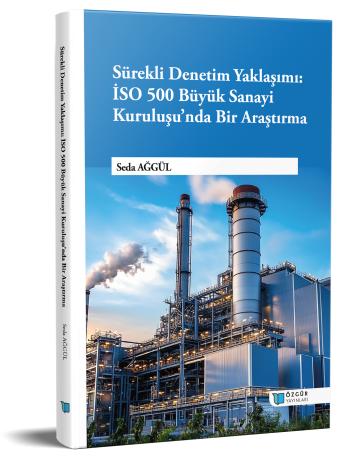
Continuous Auditing Approach: A Study on the ISO 500 Registered Industrial Enterprises
Synopsis
In today’s world, where globalization has accelerated and information technologies have transformed business processes, the understanding of accounting and auditing is also undergoing a significant process of change. In particular, the increase in digitalization, big data, automation, and the need for real-time information has made it necessary to reassess traditional auditing methods. From the perspective of businesses, it is no longer considered sufficient merely to review past transactions; there is also an expectation for risks to be monitored instantly, errors and fraud to be detected within a short period of time, and the continuity of reliable financial information to be ensured. At this point, the continuous auditing approach has emerged as one of the most important components of the modern auditing perspective.
Continuous auditing, with its information technology-supported structure, provides businesses with real-time control, rapid reporting, and effective risk management opportunities. Especially after global accounting scandals, the need to restore confidence in auditing processes has further increased the importance of continuous auditing practices. Effective auditing systems have become not merely a preference but a necessity for businesses in terms of gaining competitive advantage, ensuring corporate sustainability, and providing reliable information to stakeholders.
This study aims to examine continuous auditing practices within the framework of Turkey’s 500 Largest Industrial Enterprises determined by the Istanbul Chamber of Industry (ISO), and to reveal businesses’ perspectives on this approach, their level of implementation, the challenges they encounter, and the advantages they obtain. It is hoped that this study will contribute to the literature in the fields of accounting, auditing, and information technologies, provide guidance for practitioners, and serve as a resource for future research.
I would like to express my gratitude to all academicians, professionals, and business representatives who contributed their knowledge and experience during the preparation of this book and participated in the research. I hope that this study will be beneficial to researchers, practitioners, and all readers interested in the subject.
Keywords:
How to cite this book
License

This work is licensed under a Creative Commons Attribution-NonCommercial 4.0 International License.
Published
ISBN
DOI
Statistics
Categories
Copyright (c) 2026 Seda Ağgül; Turan Öndeş