
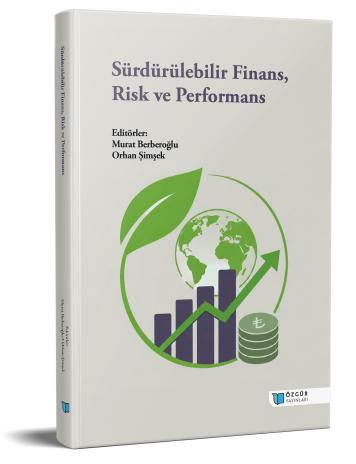
Campus Cooperatives as an Alternative Organizational Model for Financial Sustainability in Universities
Chapter from the book:
Berberoğlu,
M.
&
Şimşek,
O.
(eds.)
2026.
Sustainable Finance, Risk, and Performance.
Synopsis
This study examines the search for alternative revenue and organizational models in response to the growing financial sustainability challenges faced by higher education institutions, focusing on campus cooperatives. Today, universities are expected not only to perform their traditional functions of education and research but also to take more active roles in social services, entrepreneurship, experiential learning, and community engagement. This situation necessitates the diversification of university revenue sources and the development of participatory governance models. Within the conceptual framework of the study, the cooperative approach is evaluated in the context of the solidarity economy, participatory governance, and the sustainable university model. Campus cooperatives are found to operate in areas such as consumer services, accommodation, education, social services, and experiential learning, while simultaneously fostering student engagement, entrepreneurial culture, and university–community interaction. The literature highlights several successful examples of campus cooperatives with different organizational structures, particularly in Japan, the United States, Canada, and the United Kingdom. The study also evaluates the current state of campus cooperatives in Türkiye and presents a case study of the Campus Business and Consumer Cooperative established within the Faculty of Economics and Administrative Sciences at Artvin Çoruh University, Hopa Campus. Based on the findings, campus cooperatives are considered a sustainable model capable of generating alternative revenue sources for universities, supporting experiential learning processes, and contributing to local development.
How to cite this book
License

This work is licensed under a Creative Commons Attribution-NonCommercial 4.0 International License.
Published
DOI
Categories
Copyright (c) 2026 Murat Berberoğlu- Orhan Şimşek; Mehmet Serkan Çalı- Salih Aydın- Uğur Uzun- Murat Berberoğlu- Hasan Ayaydın- Mustafa Uysal- Erhan Daştan- Ceyda Yerdelen Kaygın- Cihan Yılmaz- Adem Ruhan Sönmez- Cengizhan Karaca- Süheyya Alpaslan Bostan- Kübra Saka Ilgın