
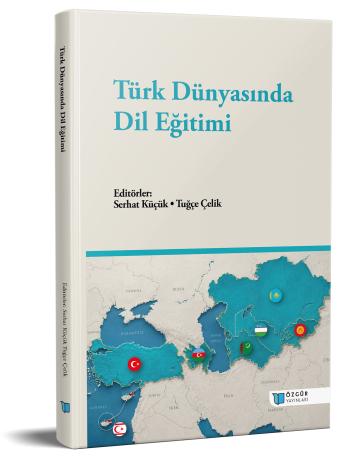
Language Education In The Turkic World
Synopsis
Some words transcend the boundaries of the era in which they were spoken and remain etched in people’s memories for many years. The starting point of our study is Ismail Gaspıralı’s famous saying, “Unity in language, thought, and action,” which emphasizes the unifying power of language. In this study, we have sought to examine language education within the context of the Turkic world from a multifaceted perspective. Our aim is to provide readers with the opportunity to make comparisons by examining language education practices in the countries of the Turkic world within a common framework, and to highlight the current state of language education in the Turkic world. The book consists of eight chapters. The first chapter of the book discusses the Turkic world and the organizations that facilitate institutional cooperation within it. The subsequent chapters focus, in turn, on the states of Turkey, Azerbaijan, Kazakhstan, Kyrgyzstan, the Turkish Republic of Northern Cyprus, Uzbekistan, and Turkmenistan. These countries are introduced in general terms, and the fundamental characteristics of their education systems are outlined. Subsequently, in each country, the teaching of the native language and foreign languages, as well as teaching materials and curricula, are examined and evaluated. Another important aspect of the study concerns the role of culture and heritage in language instruction. In this context, the extent to which cultural elements are incorporated into language teaching processes in the examined countries was analyzed, and the ways in which shared cultural heritage is reflected in these teaching processes across these nations were discussed. The findings once again underscore the importance of language education in terms of cultural continuity. Unlike studies in the literature, which mostly focus on Western countries, with this book we hope to offer a unique contribution to the field by adopting a holistic perspective on language education processes in the Turkic world. In this regard, it is our greatest hope that the book will serve as a guide for future comparative and practice-oriented research. We would like to thank all the researchers who contributed to the preparation of this book, as well as the academics from across the Turkic world whose valuable insights have enriched our work; we hope that our study will contribute to the existing literature and shed light on future research.
How to cite this book
License

This work is licensed under a Creative Commons Attribution-NonCommercial 4.0 International License.
Published
ISBN
DOI
Statistics
Categories
Copyright (c) 2026 Serhat Küçük- Tuğçe Çelik