
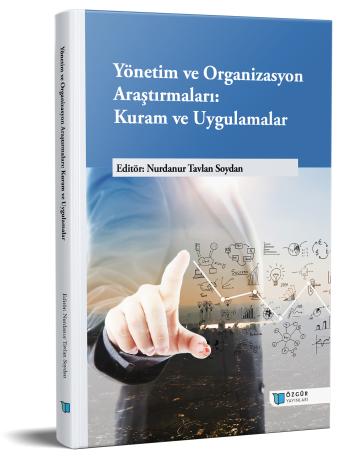
The Transformation of Managerial Decision-Making Processes Through Generative Artificial Intelligence: A Conceptual Evaluation
Chapter from the book:
Tavlan Soydan,
N.
(ed.)
2026.
Management and Organization Research: Theory and Practice.
Synopsis
This research paper will investigate the revolutionary effects of generative artificial intelligence in the decision-making processes of managers in a theoretical context. Although the conventional decision-making theories focus on the human cognition limitation and the influence of the organizational environment, generative AI opens a new dimension of content generation, information synthesis, and strategic suggestions. The paper evaluates the use of generative AI in strategic, operational, and human resource decision-making, as well as covers its opportunities, risks, and ethical considerations. The results indicate that the use of generative AI leads to increased speed of decision-making, decreased cognitive load, and the broadening of the options that can be offered to managers. Nevertheless, it also brings up serious issues like hallucinations, algorithmic bias, and transparency and accountability problems. This paper suggests an Augmented Managerial Decision-Making (AMDM) model that is built on human-AI cooperation, which implies task-technology fit, human supervision, ethical management, and competency change. To sum up, generative AI is highly promising in terms of transforming the managerial decision-making process, but it is crucial to note that its use should be responsible, human-centered, and ethically based.
How to cite this book
License

This work is licensed under a Creative Commons Attribution-NonCommercial 4.0 International License.
Published
DOI
Categories
Copyright (c) 2026 Nurdanur Tavlan Soydan; Ahmet Sadık Yıldırım- Özüm Eğilmez- Ahu Sezgin- Emrah Köksal Sezgin- Şerife Karagöz- M. Sabri Şirin- Serpil Köse- Mihribar Bilgin- Murat Nazlı- Emine Yılmaz Atik- Muhammet Esat Erdoğan- Rabia Yılmaz