
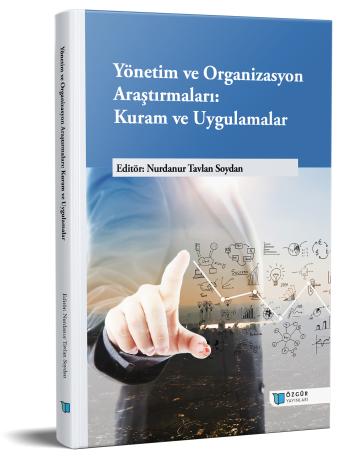
Evaluation of Dynamic Capabilities Theory in Organizational Context
Chapter from the book:
Tavlan Soydan,
N.
(ed.)
2026.
Management and Organization Research: Theory and Practice.
Synopsis
The current century represents an era of rapid and abrupt changes in environmental conditions across structural, technological, technical, economic, and political domains. Even the slightest change can be detected by organizations sensitive to their environment. Consequently, one of the most critical objectives for contemporary organizations is to continuously develop themselves, adapt to evolving environmental factors, and achieve a competitive advantage over their rivals. This situation is attainable through the improvement and development of the organization's internal and external competencies. Dynamic capabilities are high-level abilities that an organization develops more effectively than its competitors focus on how organizations generate new skills to meet evolving requirements, even in turbulent environments, thereby gaining a competitive edge. Organizations that apply the theory of dynamic capabilities within strategic management can achieve superior success and business performance compared to their competitors. In addition to dynamic capabilities, organizations benefit from prolonged organizational lifespans, surpassing their goals, engaging in continuous innovation, and strengthening organizational culture. Ultimately, through dynamic capabilities, organizations can leverage factors such as low-cost operations and improved operational efficiency to solidify their success. The primary objective of this study is to theoretically examine topics related to the theory of dynamic capabilities within an organizational context by evaluating theoretical foundations, the components and organizational analysis of the theory. Additionally, the study aims to develop a specific perspective on the theory of dynamic capabilities for academic literature and to provide practical guidance for managers in this field.
How to cite this book
License

This work is licensed under a Creative Commons Attribution-NonCommercial 4.0 International License.
Published
DOI
Categories
Copyright (c) 2026 Nurdanur Tavlan Soydan; Ahmet Sadık Yıldırım- Özüm Eğilmez- Ahu Sezgin- Emrah Köksal Sezgin- Şerife Karagöz- M. Sabri Şirin- Serpil Köse- Mihribar Bilgin- Murat Nazlı- Emine Yılmaz Atik- Muhammet Esat Erdoğan- Rabia Yılmaz