
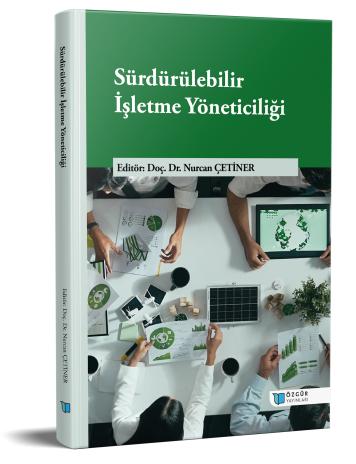
Green Transformation Models in Businesses for a Sustainable Future
Chapter from the book:
Çetiner,
N.
(ed.)
2026.
Sustainable Business Management .
Synopsis
Traditional business approaches have been significantly challenged and re-evaluated due to developments and events occurring over the past century, particularly global climate change, environmental degradation, depletion of energy resources, and sustainable development goals. In this context, green transformation has gained importance as a strategic approach aimed at reducing the environmental impacts of businesses, increasing resource efficiency, and restructuring economic activities in line with sustainability principles. Within the scope of this study, green transformation models in businesses are examined from a sustainable future perspective. First, the theoretical foundations of the concepts of sustainable development and green transformation are analyzed. Subsequently, circular economy, ESG (Environmental, Social, and Governance) management, digital sustainability, and green innovation models are evaluated. The literature review reveals that green transformation practices not only ensure environmental sustainability for businesses but also provide a competitive advantage, corporate reputation, cost efficiency, and long-term financial resilience. In addition, it has been determined that digital technologies accelerate green transformation processes and play a significant role in optimizing resource utilization. In terms of the contributions of this study to the literature, it is concluded that green transformation in businesses is not only an environmental necessity but also an important transformation model in terms of economic sustainability, corporate resilience, and strategic competitiveness. Accordingly, it is demonstrated that businesses should adopt sustainable management approaches, develop environmentally friendly production policies, and invest in green innovation practices as these provide significant benefits for organizations.
How to cite this book
License

This work is licensed under a Creative Commons Attribution-NonCommercial 4.0 International License.
Published
DOI
Categories
Copyright (c) 2026 Nurcan Çetiner; Menekşe Ahbab- İlkay Saltık Gür- Deniz Atalay- Sonay Satır- Merve Seda Karcıoğlu- Tuncel Öz- Rana Özyurt Kaptanoğlu