
Fiscal Policies in Europe: A Panel Data Analysis of Public Expenditures
Chapter from the book:
Ata,
A.
Y.
(ed.)
2026.
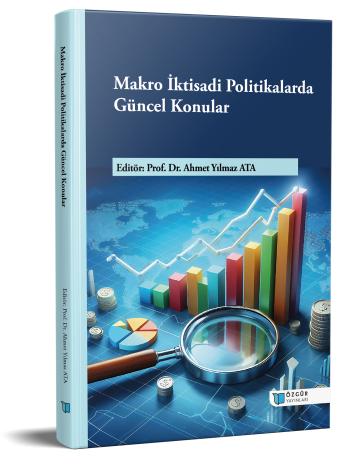
Current Issues in Macroeconomic Policies.
Synopsis
The share of public expenditures in GDP has been undergoing a structural transformation in European welfare states, a process significantly accelerated by the COVID-19 pandemic. This study investigates the macroeconomic determinants of general government expenditures in seven high-income European economies—France, Finland, Belgium, Denmark, Italy, Norway, and Sweden—over the period 2000–2023, with a particular focus on the pandemic break after 2020. Using annual panel data, the analysis employs Fixed Effects, System GMM, FMOLS, and DOLS methods, along with unit root (LLC, IPS) and cointegration (Pedroni, Westerlund) tests, and a dummy variable for the COVID-19 structural break. The findings confirm that real GDP growth, unemployment, public debt, demographic ageing, real interest rates, trade openness, and health expenditure composition are long-term significant determinants. Even when other factors are controlled for, the COVID-19 dummy leads to a structural increase of 3.8–4.0 percentage points in the expenditure share. Demographic ageing emerges as the dominant driving force across all countries, with the highest expenditure sensitivity observed in Italy and Belgium. Post-pandemic fiscal paths diverge: Nordic countries pursue faster consolidation, while Mediterranean countries struggle with persistent debt–expenditure spirals. Policy recommendations focus on the sustainability of ageing-related spending commitments and the design of social investment strategies that incorporate gender and intergenerational equity objectives within the European fiscal framework.
How to cite this book
License

This work is licensed under a Creative Commons Attribution-NonCommercial 4.0 International License.
Published
DOI
Categories
Copyright (c) 2026 Ahmet Yılmaz Ata; Burcu Karaca- Özge Arpacıoğlu Özdemir- Çağatay Tunçsiper- Arif İğdeli- Habibe Günsel Doğrul- Muhammed Yusuf Bilden- Ahmet Yılmaz Ata- Ayşe Eryer