
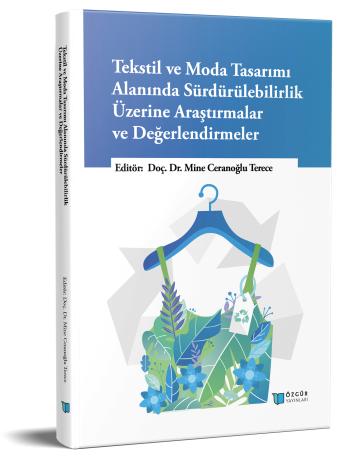
Research and Evaluations on Sustainability in Textile and Fashion Design
Synopsis
In recent years, sustainability has become one of the fundamental concepts guiding research, practice, and policy development processes in the field of textile and fashion design, encompassing environmental, economic, and social dimensions. The rapid depletion of natural resources, climate change, increasing amounts of waste, and unsustainable consumption patterns have encouraged designers, researchers, and industry stakeholders to develop more responsible production and consumption models. Within this transformation process, fashion design has evolved beyond a discipline that merely produces aesthetic and functional solutions, becoming one that also embraces environmental, economic, and social responsibilities.
This book, entitled Research and Evaluations on Sustainability in Textile and Fashion Design, aims to contribute to the existing body of literature by bringing together contemporary studies that examine the concept of sustainability from different perspectives. The chapters included in the volume reveal the multifaceted nature of sustainability in textile and fashion design while supporting theoretical approaches with practical examples.
The first chapter examines the environmental impacts of the fast fashion system through the perspective of carbon footprint analysis and comprehensively discusses the effects of production and consumption processes on the climate crisis. The second chapter explores sustainable fashion marketing in the context of consumer perceptions and brand strategies, while discussing the place of sustainability discourses within contemporary consumer culture. The third chapter focuses on the increasingly significant concept of the prosumer in sustainable fashion and presents a design proposal that encourages user participation and aims to extend the lifespan of garments. The fourth chapter evaluates the zero-waste design approach through the denim garment design process and introduces methods and practices aimed at preventing waste generation during the design stage. The final chapter addresses traditional handicrafts and local production knowledge in conjunction with contemporary design approaches and artificial intelligence-supported creative processes, evaluating their potential contribution to the transmission of cultural heritage into contemporary fashion design. In doing so, the book highlights not only the environmental dimension of sustainability but also its cultural and social aspects.
Taken together, these studies demonstrate that sustainability is not merely an approach focused on reducing resource consumption; rather, it represents a holistic understanding that encompasses the reconsideration of design processes, the transformation of consumer habits, the development of innovative production models, and the preservation of cultural values.
I would like to express my sincere gratitude to all chapter authors who contributed to the preparation of this book. I hope that this volume will serve as a valuable reference source for researchers, academics, students, and industry professionals. Furthermore, I wish that it will inspire future research and practices in the field of sustainable textile and fashion design.
Assoc. Prof. Dr. Mine Ceranoğlu Terece
Editor
Chapters
How to cite this book
License

This work is licensed under a Creative Commons Attribution-NonCommercial 4.0 International License.
Published
ISBN
DOI
Statistics
Categories
Copyright (c) 2026 Mine Ceranoğlu Terece; Hülya Arabacı- Neslihan Demir- Merve Balkış- Emine Koca- Esra Enes- Nazan Özcan