
Fast Fashion, Slow Disaster: The Anatomy of the Carbon Footprint
Chapter from the book:
Ceranoğlu Terece,
M.
(ed.)
2026.
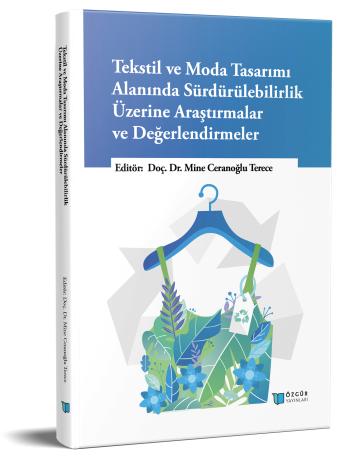
Research and Evaluations on Sustainability in Textile and Fashion Design.
Synopsis
Driven by fast and ultra-fast fashion regimes in the 21st century, the fashion industry has transcended being a mere domain of aesthetic production to become a primary carbon hotspot triggering the global climate crisis. This book chapter examines the anatomy of the carbon footprint in the apparel sector through five core life cycle stages extending from raw materials to end-of-life scenarios. The study questions the role of traditional design practices in environmental pollution and highlights the fact that approximately 80% of a garment's life cycle emissions are locked in at the design stage through material, sourcing, and manufacturing decisions. Methodologically, Life Cycle Assessment tools and Product Environmental Footprint Category Rules are evaluated, discussing legal and methodological constraints such as the tendency of secondary databases to overestimate the impacts of natural fibers like wool while underestimating synthetic fibers like polyester. Furthermore, the thermodynamic limits of upcycling and recycling (mechanical and chemical) methods, the technical barriers in separating fiber blends, and the optimization opportunities provided to designers by AI and machine learning-integrated eco-design software are analyzed. In conclusion, this study argues that the role of the fashion designer must evolve from crafting aesthetic forms to becoming a holistic, carbon-conscious system architect grounded in the principles of the circular economy.
How to cite this book
License

This work is licensed under a Creative Commons Attribution-NonCommercial 4.0 International License.
Published
DOI
Categories
Copyright (c) 2026 Mine Ceranoğlu Terece; Hülya Arabacı- Neslihan Demir- Merve Balkış- Emine Koca- Esra Enes- Nazan Özcan