
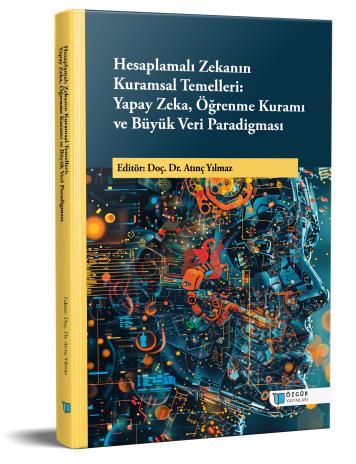
The Role of Artificial Intelligence and Big Data in Transforming Modern Cybersecurity
Chapter from the book:
Yılmaz,
A.
(ed.)
2026.
Theoretical Foundations of Computational Intelligence: Artificial Intelligence, Learning Theory, and the Big Data Paradigm .
Synopsis
In the era of digital transformation, cybersecurity has evolved from a technical necessity into a fundamental pillar for organizational resilience. The rapid proliferation of cloud computing, the Internet of Things (IoT), and integrated enterprise ecosystems has streamlined operations but simultaneously expanded the cyber-attack surface (Saeed et al., 2023). Modern adversaries now leverage automated and intelligent techniques, rendering traditional, rule-based security measures insufficient against complex threats such as ransomware, supply chain compromises, and zero-day breaches (Lahare & Wakchaure, 2025). Within this landscape, Enterprise Resource Planning (ERP) systems represent a critical strategic asset. As the operational backbone of organizations, they manage highly sensitive data across finance, human resources, and customer relations. The migration of ERP systems to cloud environments and their integration with diverse APIs has introduced new vulnerabilities, including misconfigurations and sophisticated phishing attacks. Consequently, protecting these high-value targets in a hyper-connected world requires a shift from reactive monitoring to proactive defense(Bhat & Jayaram, 2025). The exponential growth of security-related data, encompassing system logs, network traffic, and user behavior, has turned modern cybersecurity into a “Big Data” challenge. Analyzing such vast and heterogeneous datasets in real-time is beyond human capacity and traditional signature-based tools. To address this, Artificial Intelligence (AI) and Machine Learning (ML) have emerged as essential solutions, offering the ability to detect hidden patterns, identify anomalies, and respond to unknown threats autonomously (Mohamed, 2025). This study provides a comprehensive analysis of how Big Data analytics and AI-driven models are transforming cybersecurity within cloud-based ERP environments. By examining the synergy between intelligent algorithms and large-scale data infrastructures, the paper identifies key implementation challenges and proposes a strategic foundation for next-generation defense systems.
How to cite this book
License

This work is licensed under a Creative Commons Attribution-NonCommercial 4.0 International License.
Published
DOI
Categories
Copyright (c) 2026 Atınç Yılmaz; Sara Naghib Zadeh- Zühre Aydın- Hatice Nur Gök- Cansu Arslan- Uygar Aydın- İnci Zaim Gökbay- Mehmet Dinçer Erbaş- Kenan Peker- Gökhan Önder Ergüven- Tevfik Erdal Baylay- Atınç Yılmaz