
Vector and Pest Control
Chapter from the book:
Sümer,
E.
H.
&
Nur,
N.
(eds.)
2026.
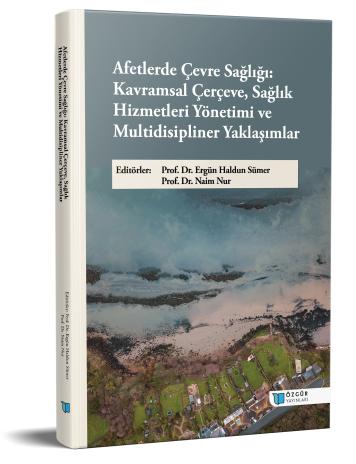
Environmental Health in Disasters: A Conceptual Framework, Health Services Management, and Multidisciplinary Approaches.
Synopsis
Disasters pose a serious threat to public health by creating breeding grounds for vectors such as mosquitoes, ticks, and rodents due to infrastructure collapse, forced migration, and deteriorating hygiene conditions. Vector-borne diseases account for approximately 17% of global infections and pose an epidemic risk not so much during the acute phase of a disaster but particularly during the recovery period, which lasts between 4 days and 4 weeks. The type of disaster determines the type of disease at risk. Floods and excessive rainfall create stagnant water, triggering mosquito-borne diseases such as malaria, dengue fever, and Zika. Earthquakes, on the other hand, lead to an increase in rodents and sandflies due to sewage damage and debris piles, raising the risk of leptospirosis and leishmaniasis. Furthermore, overcrowding in housing areas brings about directly transmitted problems such as scabies and lice. Global warming expands the habitats of these vectors, including regions like the Mediterranean and Europe in new risk zones. Three basic strategies should be followed in vector control: environmental sanitation, personal protection, and chemical and biological control. Draining stagnant water, disposing of waste in enclosed areas, and storing food in metal containers are examples of environmental sanitation. Personal protection includes the use of insecticide-impregnated mosquito nets, protective clothing, and repellent applications. The use of minimal pesticides under the supervision of expert personnel and biological methods such as larvivorous fish are among the actions to be taken in chemical and biological control. To reduce post-disaster mortality, an effective surveillance system should be established, environmental sanitation should be ensured, and public awareness campaigns should be conducted to develop preventive health services.
How to cite this book
License

This work is licensed under a Creative Commons Attribution-NonCommercial 4.0 International License.
Published
DOI
Categories
Copyright (c) 2026 Ergün Haldun Sümer- Naim Nur; Serkan Çelikgün- İmran Şahin Düz- Sanem Nemmezi Karaca- Naim Nur- Nagehan Ekici Koşaroğlu- Nurcan Bağlam- İrem Akova- Şahin Yıldırım- İbrahim Furkan Sarkım- Zeynep Sümer- Yaşam Deniz- Nuriye Dinç- Yeltekin Demirel- Emre Sarı- Elif Alıcı Bıyık- Veysel Kenan Çelik- Yusuf Kenan Tekin- İlhan Korkmaz- Gülaçan Tekin- Ergün Sümer- Gülay Yıldırım- Sema Merve Sümer- Ferdağ Yıldırım