
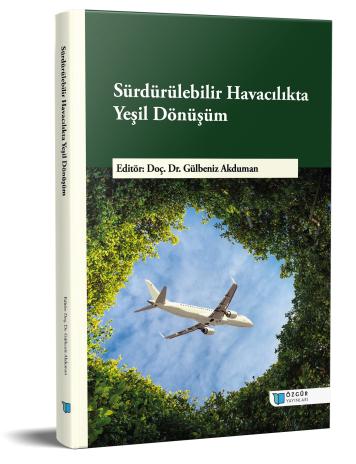
The Green Aviation Paradox: Economic Constraints of Decarbonization in Aviation from a Leisure Industry Perspective
Chapter from the book:
Akduman,
G.
(ed.)
2026.
Green Transformation in Sustainable Aviation.
Synopsis
This chapter examines the economic constraints that the decarbonization process in the aviation sector may impose on leisure-oriented travel demand. In line with net-zero carbon targets, Sustainable Aviation Fuel (SAF), carbon pricing mechanisms, next-generation aircraft technologies, and infrastructure investments are reshaping the cost structures of airlines. However, the transfer of these additional costs to ticket prices may create a risk of demand contraction, particularly among tourism-oriented and price-sensitive passenger segments. The concept of the green aviation paradox is discussed through the tension between aviation growth objectives and the obligation to reduce emissions. Based on a literature-driven conceptual framework and a hypothetical willingness-to-pay scenario developed for the Istanbul–Antalya route, the study uses this route as an illustrative example because of its intensive domestic traffic and strong tourism demand, making it a representative case for leisure travel in Türkiye. The scenario findings suggest that low-emission flight alternatives can generate perceived environmental value for passengers; however, this value may not fully offset higher ticket prices under all circumstances. The results indicate that sustainable flight products should be designed not only around environmental narratives but also in conjunction with measurable carbon reductions, reliable certification systems, cost transparency, and publicly supported incentive mechanisms. In addition, factors such as income level, environmental awareness, travel necessity, and the availability of alternative transportation options are considered likely to influence passengers’ willingness to pay. Therefore, pricing decisions should be formulated by taking into account behavioral and destination-based effects, in addition to technical cost calculations. The chapter emphasizes the importance of evaluating decarbonization policies from the perspectives of airlines, passengers, and tourism destinations simultaneously, and demonstrates that demand-side analyses constitute a valuable complementary area for future research.
How to cite this book
License

This work is licensed under a Creative Commons Attribution-NonCommercial 4.0 International License.
Published
DOI
Categories
Copyright (c) 2026 Gülbeniz Akduman; Hamza Ceylan- Gözde Güven- Eren Sezer