
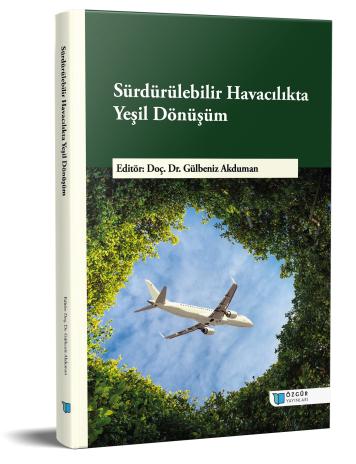
Evaluating the Impact of Sustainable Aviation Fuel (SAF) Use on Airline Business Models Through SWOT Analysis
Chapter from the book:
Akduman,
G.
(ed.)
2026.
Green Transformation in Sustainable Aviation.
Synopsis
This study evaluates the strategic impacts of Sustainable Aviation Fuel (SAF) use on different airline business models within the framework of SWOT analysis. SAF stands out among the short- and medium-term decarbonization options for aviation due to its compatibility with existing aircraft and fuel infrastructure and its potential to reduce life-cycle emissions. However, high production costs, limited supply, feedstock competition, and regional differences in supply conditions prevent SAF adoption from producing the same outcomes across all airline business models. Based on a qualitative SWOT design employing document analysis, the study evaluates findings derived from academic literature, reports of international aviation organizations, and regulatory frameworks according to full-service, low-cost, charter/non-scheduled, and regional airline business models. The results indicate that full-service airlines are relatively more advantaged in terms of brand value, corporate customer portfolios, and access to green finance, whereas low-cost airlines are more sensitive to SAF-related price increases due to their cost leadership strategy. In charter and regional airlines, demand structure, fleet size, route characteristics, and access to SAF supply emerge as the main determining factors.
How to cite this book
License

This work is licensed under a Creative Commons Attribution-NonCommercial 4.0 International License.
Published
DOI
Categories
Copyright (c) 2026 Gülbeniz Akduman; Hamza Ceylan- Gözde Güven- Eren Sezer