
The Effect of Omnipotence on Buying Behavior
Chapter from the book:
Köroğlu,
M.
(ed.)
2026.
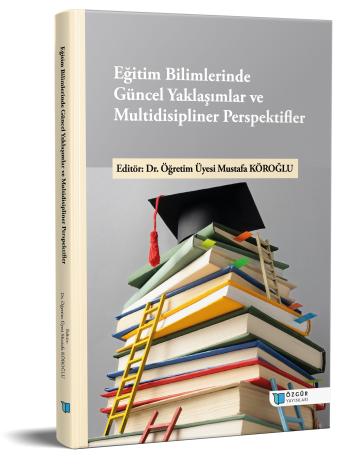
Current Approaches and Multidisciplinary Perspectives in Educational Sciences.
Synopsis
One of the primary goals of psychological counseling and guidance (PCG) services is to help individuals develop healthy decision-making skills. Decision-making skills aim to enable people to make rational decisions by considering alternatives, rather than acting on impulsive or intense emotional impulses. One area where decision-making dynamics are most evident—and where external conditions frequently attempt to influence them—is buying behavior. Psychoanalytic theory is an effective framework for understanding the dynamics of buying decisions due to its in-depth perspective. Due to its capacity for in-depth analysis and interpretation, psychoanalysis is a theory studied across disciplines, including literature, art, film, and politics. In the field of economics—one of our key social institutions—psychoanalysis can also make significant contributions to the in-depth examination of human behavior within production and consumption processes. Buying behavior, too, is the result of a complex process influenced by both the individual’s characteristics and the characteristics of the product or service being bought. One psychoanalytic concept that can help explain this complex process is the feeling of omnipotence. Since the feeling of omnipotence is a characteristic of the narcissistic personality, it has not been examined extensively as a separate concept. The sense of omnipotence, which arises as a result of narcissistic fractures, traumas, and separation-individuation issues during infancy, structures the individual’s self-perception and self-structure in a way that compensates for fragile narcissism. Psychological processes dominated by the sense of omnipotence have the potential to shape human relationships—within the context of object relations—as well as consumption-production relationships. An individual possessing this sense of omnipotence may be inclined to buying products offered by marketing that embody status, power, comfort, and other such attributes in order to sustain this feeling. Since a fragile narcissistic structure may require reassurance unless it undergoes a thorough therapeutic process, the dominant role of this feeling in buying processes will persist for a long time. In this study, the development of the feeling of omnipotence and its impact on purchasing processes are explained under subheadings, presented as suggestions for social and cultural transformation. The information presented here could be beneficial in both the guidance field—where the preventive, developmental, and protective functions of PCG services are prioritized—and in the field of psychological counseling.
How to cite this book
License

This work is licensed under a Creative Commons Attribution-NonCommercial 4.0 International License.
Published
DOI
Categories
Copyright (c) 2026 Mustafa Köroğlu; Habib Hamurcu- Kemal Doymuş- Fatih Sezek- Mehmet Şam- Ethem Gürhan- Fikret Gülaçtı- Mustafa Köroğlu- Yasin Demirci