
Critical Pedagogy and the Conceptualization of Social Justice in the Elementary School Context
Chapter from the book:
Köroğlu,
M.
(ed.)
2026.
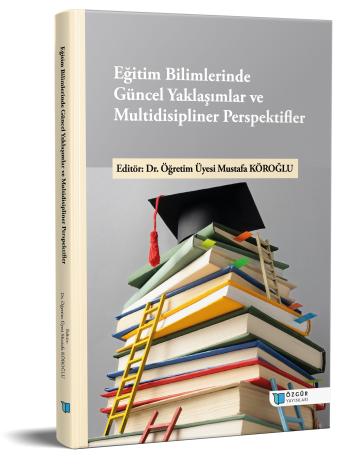
Current Approaches and Multidisciplinary Perspectives in Educational Sciences.
Synopsis
This chapter reconceptualizes Turkish primary classrooms as micro-political spaces in which social justice and student subjectification are simultaneously produced. Drawing on critical pedagogy (Freire, 1970) and Nancy Fraser’s (2008) tripartite framework of redistribution, recognition, and representation, the chapter analyzes how everyday pedagogical practices—such as classroom discourse, curricular representation, assessment systems, and inclusion policies—function as mechanisms of justice production rather than neutral instructional techniques.
Going beyond structural analyses of inequality, the chapter integrates Self-Determination Theory (Ryan & Deci, 2000, 2017) to illuminate the motivational and psychological dimensions of justice in early schooling. By linking redistribution to competence support, recognition to relatedness, and representation to autonomy, the study proposes a hybrid analytical model that bridges critical theory and motivational psychology. This interdisciplinary approach enables a more comprehensive understanding of how social justice in primary education must address not only structural inequalities but also students’ capacity to experience themselves as competent, autonomous, and valued subjects. Situated within the Turkish educational context—characterized by centralized curricula, exam-oriented structures, and growing cultural and linguistic diversity—the chapter argues that primary education represents a critical threshold for democratic formation. Teachers are positioned as central agents who mediate both structural justice and motivational conditions within institutional constraints.
The chapter’s original contribution lies in theorizing primary classrooms as sites where normative, structural, and psychological dimensions of justice intersect. It ultimately proposes a holistic model of socially just primary education that integrates democratic pedagogy, equitable resource distribution, autonomy support, competence development, and belonging construction.
How to cite this book
License

This work is licensed under a Creative Commons Attribution-NonCommercial 4.0 International License.
Published
DOI
Categories
Copyright (c) 2026 Mustafa Köroğlu; Habib Hamurcu- Kemal Doymuş- Fatih Sezek- Mehmet Şam- Ethem Gürhan- Fikret Gülaçtı- Mustafa Köroğlu- Yasin Demirci