
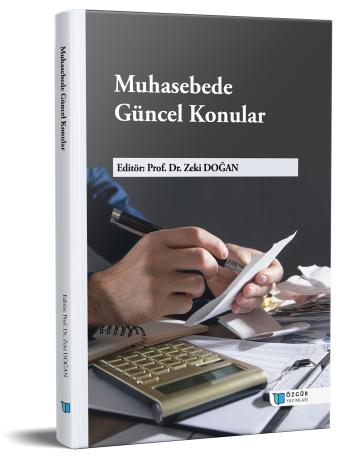
Carbon Accounting in the Context of the Carbon Border Adjustment Mechanism (CBAM)
Chapter from the book:
Doğan,
Z.
(ed.)
2026.
Current Issues in Accounting.
Synopsis
The fight against the global climate crisis and the goal of a sustainable economic transition have taken on a new dimension with the European Union’s implementation of the Carbon Border Adjustment Mechanism (CBAM). Designed to prevent carbon leakage and establish fair carbon pricing on a global scale, this mechanism makes environmental costs a legal requirement in international trade. In this context, the aim of this study is to examine how carbon accounting is applied by businesses and how it contributes to them within the CBAM process. With the CBAM set to be fully implemented from 2026, the cost pressures and regulatory obligations facing businesses operating in carbon-intensive sectors will be addressed within a theoretical framework. The study emphasises that carbon accounting is not merely a sustainability reporting tool but also a strategic discipline that enables businesses to avoid high ‘default value’ penalties and achieve cost savings through the use of actual emissions data. Particularly for countries such as Turkey, which have deep trade ties with the EU, the establishment of a national emissions trading system (TR-ETS) and the strengthening of the carbon accounting infrastructure are of vital importance for maintaining economic competitiveness.
How to cite this book
License

This work is licensed under a Creative Commons Attribution-NonCommercial 4.0 International License.
Published
DOI
Categories
Copyright (c) 2026 Zeki Doğan; Abitter Özulucan- Abdulkerim Daştan- Eda Köse- İsmail Bekci- Ergin Temel- Hakan Seldüz- Adalet Zozik- Ersin Timur- Burhan Günay- Meryem Uslu- İpek Yaylalı- Sevim Ağaç- Ayşe Gül Gök- M. Yılmaz İçerli