
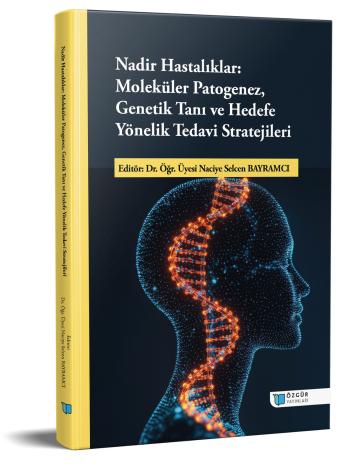
Rare Diseases: Definition, Epidemiology, Molecular Foundations, and Modern Classification Approaches
Chapter from the book:
Bayramcı,
N.
S.
(ed.)
2026.
Rare Diseases: Molecular Pathogenesis, Genetic Diagnosis, and Targeted Therapeutic Strategies.
Synopsis
Rare diseases represent a heterogeneous group of disorders associated with high morbidity, mortality, prolonged diagnostic evaluation processes, and substantial socioeconomic burden despite their low prevalence. More than 7,000 rare diseases have been identified to date, the majority of which are of genetic origin. Advances in genomic technologies have enabled rare diseases to be evaluated not only on the basis of clinical manifestations, but also through genomic variations, dysregulated biological pathways, cellular network organization, and multi-omics profiles. Nevertheless, pronounced phenotypic heterogeneity, low prevalence, limited patient cohorts, and prolonged and complex clinical delays described as the diagnostic odyssey continue to pose major challenges for the molecular characterization of rare diseases, interpretation of genotype–phenotype relationships, and development of patient-specific therapeutic strategies. Next-generation sequencing technologies, long-read genomic analyses, optical genome mapping, and epigenomic approaches contribute to the identification of previously unrecognized pathogenic variants. In addition, CRISPR-based genome-editing systems, RNA-based therapeutics, and patient-specific translational models are increasing the importance of precision medicine in rare diseases. While ontological systems such as the Human Phenotype Ontology (HPO) and the Orphanet Rare Disease Ontology (ORDO) play important roles in standardizing phenotypic and molecular data, multimodal artificial intelligence systems, systems biology, and network medicine approaches are becoming increasingly central to modeling complex genotype–phenotype relationships. Collectively, these developments demonstrate that rare diseases are being reshaped beyond traditional clinical categories toward novel mechanism-oriented classification paradigms based on genomics, molecular pathogenesis, and systems biology.
How to cite this book
License

This work is licensed under a Creative Commons Attribution-NonCommercial 4.0 International License.
Published
DOI
Categories
Copyright (c) 2026 Naciye Selcen Bayramcı; Naciye Selcen Bayramcı- Filiz Turan- Dilan Yavuz- Filiz Karaoğlan- Rümeysa Demirkaya- Büşra Görgün- Bedrettin Selvi- Filiz Demir- Emel Canpolat- Berke Can Acar- Çağlar Berkel- Ergün Sümer