
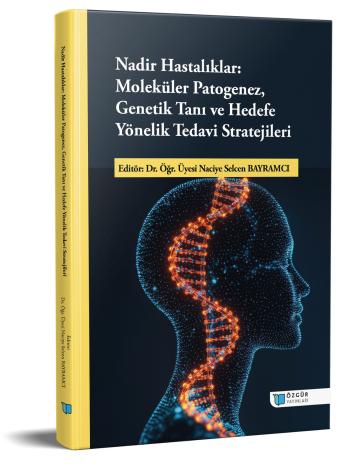
Modern Classification Approaches and Molecular Foundations in Rare Diseases
Chapter from the book:
Bayramcı,
N.
S.
(ed.)
2026.
Rare Diseases: Molecular Pathogenesis, Genetic Diagnosis, and Targeted Therapeutic Strategies.
Synopsis
Rare diseases constitute a complex group of disorders associated with substantial clinical heterogeneity, diagnostic challenges, and significant biomedical burden despite their low prevalence. Contemporary classification approaches for rare diseases are no longer based solely on clinical phenotypes or classical Mendelian inheritance models; instead, they are increasingly being reshaped through modern molecular biology and systems biology frameworks integrating genomic, transcriptomic, proteomic, metabolomic, and epigenomic data. In this chapter, rare diseases are etiopathogenetically classified as monogenic, chromosomal/genomic, mitochondrial, immunological, infectious, multifactorial, and idiopathic disorders. In addition, the roles of somatic mosaicism, gene–environment interactions, epigenetic regulation, immunometabolic processes, cellular heterogeneity, and biological network dynamics in disease heterogeneity are discussed. Next-generation sequencing technologies, single-cell genomic approaches, spatial transcriptomic analyses, and artificial intelligence-assisted computational biology applications are evaluated in the context of understanding disease mechanisms, identifying biomarkers, and developing precision medicine strategies. Furthermore, the multilayered nature of rare disease biology is examined within the framework of mitochondrial heteroplasmy, inborn errors of immunity, zoonotic infections, and complex neurodegenerative processes. Collectively, these advances demonstrate that rare diseases are evolving beyond classical descriptive classification systems toward dynamic translational biomedical paradigms centered on molecular mechanisms, biological pathways, and system-level interactions.
How to cite this book
License

This work is licensed under a Creative Commons Attribution-NonCommercial 4.0 International License.
Published
DOI
Categories
Copyright (c) 2026 Naciye Selcen Bayramcı; Naciye Selcen Bayramcı- Filiz Turan- Dilan Yavuz- Filiz Karaoğlan- Rümeysa Demirkaya- Büşra Görgün- Bedrettin Selvi- Filiz Demir- Emel Canpolat- Berke Can Acar- Çağlar Berkel- Ergün Sümer