
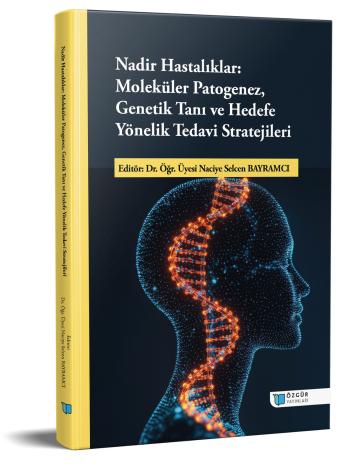
Integrated Multi-Omics and Artificial Intelligence in Rare Diseases: From Molecular Mechanisms to Precision Diagnosis and Digital Phenotyping
Chapter from the book:
Bayramcı,
N.
S.
(ed.)
2026.
Rare Diseases: Molecular Pathogenesis, Genetic Diagnosis, and Targeted Therapeutic Strategies.
Synopsis
Rare diseases, despite their low individual prevalence, represent one of the fundamental paradoxes of modern biomedical research by collectively imposing a substantial global disease burden. In the post-Human Genome Project era, the clinical implementation of whole exome sequencing and whole genome sequencing technologies has significantly improved molecular diagnostic capacity; however, a considerable proportion of patients still remain without a definitive genetic diagnosis. This gap arises not only from technical limitations but also from the inability of gene-centered and linear genotype-phenotype models to adequately capture the multi-layered and dynamic nature of disease biology. Current evidence indicates that rare diseases are associated with complex dysregulation across multiple biological layers, including the genome, epigenome, transcriptome, proteome, metabolome, and microbiome. In this context, integrated multi-omics analyses supported by machine learning and deep learning-based artificial intelligence approaches provide a novel methodological paradigm for modeling disease mechanisms. Nevertheless, major analytical challenges persist, including high-dimensional data structures, limited sample sizes, technical heterogeneity, batch effects, and constraints in causal inference (particularly the distinction between correlation and causation, as well as confounding effects). Moreover, digital phenotyping approaches, enabling continuous and high-resolution monitoring of clinical and behavioral data, allow diseases to be assessed as dynamic processes. These advances are critical for improving diagnostic accuracy, enhancing mechanistic understanding, and facilitating the transition toward precision medicine in rare diseases.
How to cite this book
License

This work is licensed under a Creative Commons Attribution-NonCommercial 4.0 International License.
Published
DOI
Categories
Copyright (c) 2026 Naciye Selcen Bayramcı; Naciye Selcen Bayramcı- Filiz Turan- Dilan Yavuz- Filiz Karaoğlan- Rümeysa Demirkaya- Büşra Görgün- Bedrettin Selvi- Filiz Demir- Emel Canpolat- Berke Can Acar- Çağlar Berkel- Ergün Sümer