
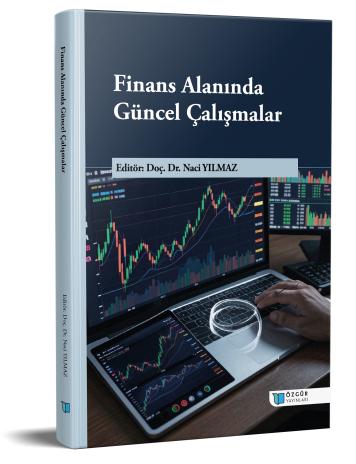
Determinants of Banking Crises: Theoretical Approaches, Empirical Findings, and Current Risks
Chapter from the book:
Yılmaz,
N.
(ed.)
2026.
Current Studies in the Field of Finance .
Synopsis
This study examines the theoretical foundations of banking crises, empirical findings, and current risk factors within the framework of a comprehensive literature review. The banking sector, central to the financial system, plays a vital role in economic growth due to its critical functions such as credit allocation and liquidity management; however, it can also be a source of systemic vulnerabilities. Crises disrupt the intermediation mechanism, leading to severe macroeconomic consequences such as investment losses and increased unemployment. In the literature, crises are explained along two main axes: Diamond and Dybvig's (1983) “bank panic” model and Kindleberger and Minsky's “financial instability hypothesis”. Modern studies, however, highlight asymmetric information problems and moral hazard. Empirical findings have shown that low growth, high inflation, budget imbalances, and especially the “credit-GDP gap” are the strongest leading indicators of crises. The findings draw attention to structural differences between developed and developing countries. Whereas crises in developed economies generally stem from excessive leverage and asset bubbles; In developing countries, exchange rate volatility, external financing dependence, and institutional weaknesses are decisive factors. In the case of Turkey, it has been observed that the strengthened supervisory mechanisms (such as the Banking Regulation and Supervision Agency) after 2001 have increased the resilience of the system. In conclusion, the literature review reveals that crises cannot be analyzed with a one-dimensional approach; early warning systems supported by innovative techniques such as machine learning and macroprudential policies are essential for financial stability.
How to cite this book
License

This work is licensed under a Creative Commons Attribution-NonCommercial 4.0 International License.
Published
DOI
Categories
Copyright (c) 2026 Melik Kamışlı; Naci Yılmaz; Naci Yılmaz- Burak Korkusuz- Oktay Turan- Batuhan Medetoğlu- Sonay Akar- Gizel Busem Sayıl- Semra Demir- Halilibrahim Gökgöz- K. Batu Tunay- Necla Tunay- Meltem Keskin- Lokman Tütüncü- Şinasi Furkan Yıldırım- Berk Yıldız- Cansu Çilingir Kara- Melek Özlem Ayas Cin- Kemal Özdemir