
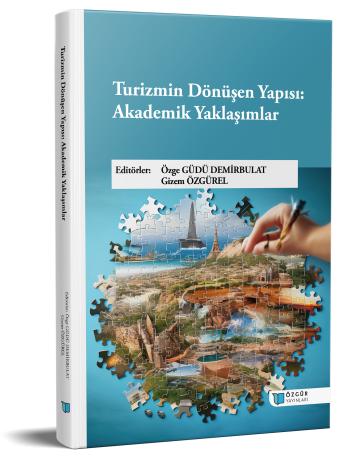
The Digital Transformation of Tourism Marketing: A Conceptual Assessment from the Perspective of Artificial Intelligence, Augmented Reality, and Social Media
Chapter from the book:
Güdü Demirbulat,
Ö.
&
Özgürel,
G.
(eds.)
2026.
The Changing Structure of Tourism: Academic Approaches.
Synopsis
The tourism sector is undergoing a profound marketing transformation driven by the rapid advancement of digital technologies. This chapter conceptually examines this transformation from the perspectives of artificial intelligence, augmented and virtual reality, social media marketing, and influencer marketing. Artificial intelligence is reshaping tourism marketing through personalized service delivery, dynamic pricing, and chatbot applications, and is explained through theoretical frameworks such as the Technology Acceptance Model and the Expectation Confirmation Model. An examination of consumer perceptions reveals that speed and perceived benefit are the most prominent positive themes, while distrust and privacy concerns remain key barriers to adoption. Augmented and virtual reality offer experiential layers beyond physical space, strengthening emotional attachment and destination loyalty in cultural heritage tourism. Research indicates that existential authenticity plays a decisive role in satisfaction and revisit intention. With the evolution of the metaverse, these technologies are expected to integrate into a broader digital reality ecosystem. Social media marketing influences tourist decision-making not merely at the level of information access but at the level of immediate emotional motivation, with user-generated content and electronic word-of-mouth increasingly replacing traditional advertising tools. In the context of influencer marketing, authenticity, parasocial relationships, and source credibility emerge as the primary factors shaping followers’ destination preferences and travel intentions. The rise of virtual influencers reveals that authenticity perception is shaped not by objective reality but by users’ perceptual constructions. The chapter argues that these four technological trends form a complementary ecosystem and proposes future research directions focused on experience quality, cultural differences, and long-term consumer behavior.
How to cite this book
License

This work is licensed under a Creative Commons Attribution-NonCommercial 4.0 International License.
Published
DOI
Categories
Copyright (c) 2026 Özge Güdü Demirbulat- Gizem Özgürel; Ümit Karadağ- Levent Karadağ- Çağnur Çörekli- Setenay Melek Yurttabir- Hasret Ulusoy Mutlu- Muhammed Nurullah Evliyaoğlu- Vildan Tüysüz- Serkan Semint- Serap Ok- Esra Cesur- Özge Alkan