
Smart Tourism and Recommender Systems
Chapter from the book:
Güdü Demirbulat,
Ö.
&
Özgürel,
G.
(eds.)
2026.
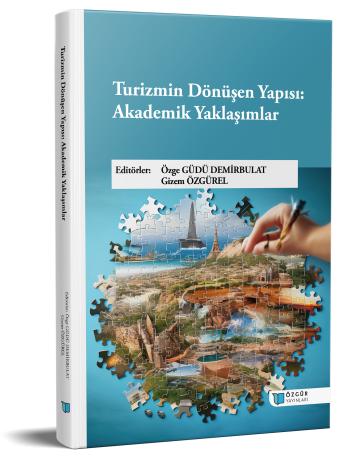
The Changing Structure of Tourism: Academic Approaches.
Synopsis
The rapid advancement of digital technologies has reshaped service delivery, tourist experiences, travel decision-making processes and competitive practices within the tourism industry. In this transformation process, smart tourism has come to the forefront through the integrated application of digital technologies such as big data, mobile technologies, cloud computing, the Internet of Things, artificial intelligence, and context-aware systems in tourism activities. Recommender systems used within the scope of smart tourism are personalized information filtering tools that help tourists access options more compatible with their needs, preferences, and travel conditions within an intensive flow of information. These systems can provide recommendations for destinations, accommodation, restaurants, events, tour packages, and routes by using data such as users’ preferences, previous behaviours, location, time, travel purpose, and contextual information. This chapter first discusses the conceptual framework, components, and technologies of smart tourism; then explains the concept of recommender systems, the main approaches used in recommender systems, and their application areas in tourism. In addition, the chapter evaluates the relationship between recommender systems and smart tourism, their contribution to tourists’ decision-making processes, and the opportunities and limitations they present for tourism businesses.
How to cite this book
License

This work is licensed under a Creative Commons Attribution-NonCommercial 4.0 International License.
Published
DOI
Categories
Copyright (c) 2026 Özge Güdü Demirbulat- Gizem Özgürel; Ümit Karadağ- Levent Karadağ- Çağnur Çörekli- Setenay Melek Yurttabir- Hasret Ulusoy Mutlu- Muhammed Nurullah Evliyaoğlu- Vildan Tüysüz- Serkan Semint- Serap Ok- Esra Cesur- Özge Alkan