
Post-Ukraine Strategic Autonomy and the European Parliament
Chapter from the book:
Kılınç Pala,
P.
B.
(ed.)
2026.
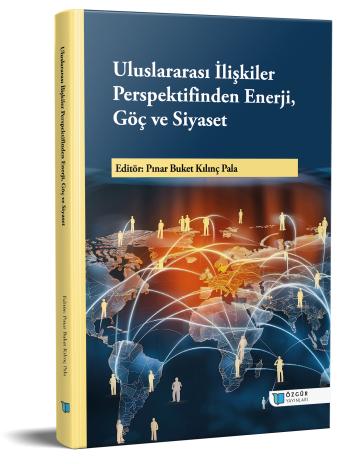
Energy, Migration And Politics From An International Relations Perspective.
Synopsis
The European Union's (EU) goal of strategic autonomy has sped up since Russia's full-scale invasion of Ukraine. This has also made the EU a more assertive geopolitical player. Existing scholarship has predominantly focused on the Union's external capacity to act, with insufficient emphasis on the institutional ramifications of this transition, especially concerning the European Parliament (EP). This article looks at how the EU's strategic autonomy after Ukraine has changed the way the European Parliament works in different areas of policy. Using a qualitative, theory-based institutional analysis, the article looks at the European Parliament's role in decisions about defense and Common Foreign and Security Policy tools, energy and fiscal measures, and decisions about enlargement made after February 2022. It argues that parliamentary influence has been both differentiated and conditional. In areas managed by intergovernmental or off-budget mechanisms—like the Strategic Compass and the European Peace Facility—the Parliament has remained structurally peripheral, primarily fulfilling deliberative and legitimizing roles. On the other hand, when strategic autonomy has been put into action through supranational legislative and budgetary processes, like REPowerEU and the Ukraine Facility, the Parliament has still had a lot of say in institutional set up. While the Parliament remains structurally constrained in intergovernmental domains, it continues to exert influence through legislative participation, political positioning, and forms of parliamentary diplomacy that extend its external engagement. The article defines this pattern as conditional empowerment, a domain-specific dynamic where parliamentary empowerment relies on governance mode rather than geopolitical significance alone. The article situates these findings within broader discussions on crisis governance and new intergovernmentalism, thereby enhancing comprehension of the democratic dimensions of the EU's evolving geopolitical stance.
How to cite this book
License

This work is licensed under a Creative Commons Attribution-NonCommercial 4.0 International License.
Published
DOI
Categories
Copyright (c) 2026 Pınar Buket Kılınç Pala; Mehmet Nur Çelikaslan- Muharrem Koz- Engin Selçuk- Fatih Demircioğlu- Vildan Meydan- Serkan Kırkeser