
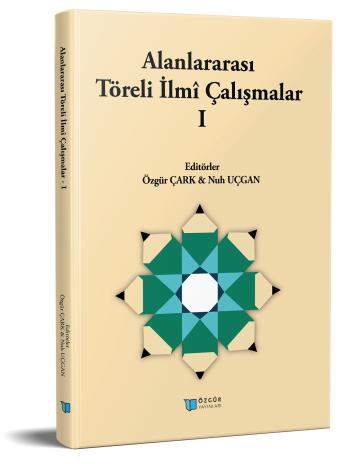
An Article on Töreli History: “Looking at Töre from a Historical Perspective”
Chapter from the book:
Çark,
Ö.
&
Uçgan,
N.
(eds.)
2025.
Interdisciplinary Töreli Scientific Studies I.
Synopsis
Töre is defined in Turkish dictionaries as custom, tradition, and convention, and this meaning is still widely used in many regions of our country today. In addition, throughout history tore was also used with meanings such as human population growth in the Ottoman State, law, and similar concepts. With these broad meanings, töre concerns almost all social sciences whose subject is human beings. The aim of this study is to determine the meaning of töre related to history and to write an article on this new topic. Historians define töre as unwritten rules that must be followed by individuals forming the nation, including the ruler. In the ancient Turkish state with the principles of equality and justice while taking töre into consideration was of crucial importance for the continuity of authority and the state. With the adoption of Islam by the Turks, shar‘i (Islamic legal) rulings became valid both in state affairs and in the daily lives of individuals. However, aspects of töre that did not conflict with Islamic rulings maintained their functionality. Beginning with the first Muslim Turkish states, the principles introduced by the sultans regarding governance—in other words, matters related to töre—were implemented under the name örf (customary law) alongside shar‘i law. One of the states that successfully formulated and implemented örfî law was the Ottoman Empire. In the Ottoman Empire, Islamic law—commonly referred to as shar‘i law—coexisted with rules enacted by the sultan, known as örfî law. Thus, shar‘i and örfî law complemented each other and formed Ottoman law.
Keywords:
How to cite this book
License

This work is licensed under a Creative Commons Attribution-NonCommercial 4.0 International License.
Published
DOI
Categories
Copyright (c) 2025 Özgür Çark, Nuh Uçgan