
Poison, Poisoning, and Treatment in Indian Medicine
Chapter from the book:
Tansü,
Y.
E.
(ed.)
2025.
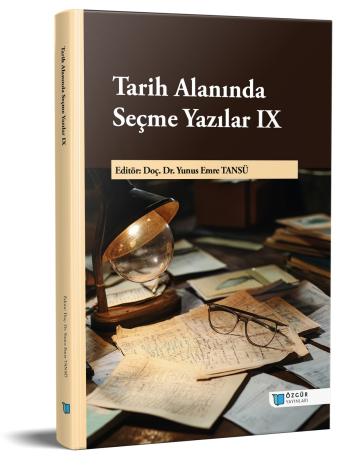
Selected Writings in the Field of History IX.
Synopsis
Poison has been one of the primary means of assassination throughout human history. For classical societies, possessing knowledge of poisons was crucial for protection. India, rich in plant, animal, and mineral diversity, has been described as the “homeland of poison” due to the easy access to poison raw materials, which allowed for the development of sophisticated toxicological knowledge. Classical Indian physicians played a significant role in shaping this knowledge. The desire of kings in this region to have control over poison knowledge and power created a specialized field for physicians, allowing them to dedicate specific sections of their medical treatises to toxicology. Notably, the works of prominent ancient Indian physicians like Suśruta, Caraka, and Vāgbhaṭa demonstrate the importance they placed on the study of poison. These studies were partially or fully translated during the Middle Ages, and thus, Indian scholars had an indirect influence on poison knowledge in the Islamic world.
In India, toxicology has been one of the eight branches of Ayurveda since its inception. In the literary tradition, toxicology is typically addressed in the final chapters of medical texts under the headings kalpasthāna and agadatantra. In terms of terminology, “gada” refers to poison, “agada” to antidote, “gara” to artificial poisons, and “garada” to a person who commits murder using poison. In the works of Suśruta, Caraka, and Vāgbhaṭa, poisons are classified into three categories—animal, plant, and chemical (mineral)—and further divided into “animate” and “inanimate” poisons, with animal poisons categorized as “animate” and plant and mineral poisons as “inanimate”.
How to cite this book
License

This work is licensed under a Creative Commons Attribution-NonCommercial 4.0 International License.
Published
DOI
Categories
Copyright (c) 2025 Yunus Emre Tansü; Semiha Zehra Özharat- Ayhan Afşın Ünal- Ramazan Arslan- Yunus Emre Tansü- Filiz Sofuoğlu Babayev- Mehmet Kavak- Kürşat Çelik- Mustafa Tanrıverdi- Nejla Doğan