
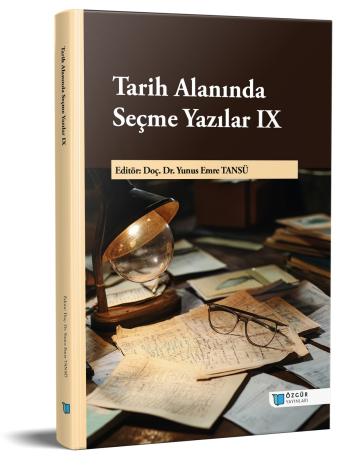
An Example of the Development of Local Government in the Ottoman Empire: The Beirut Municipal Regulations of 1863
Chapter from the book:
Tansü,
Y.
E.
(ed.)
2025.
Selected Writings in the Field of History IX.
Synopsis
This study explores the institutionalization of modern municipal governance in the Ottoman Empire through the case of the 1863 Beirut Municipal Regulation (Beyrut Belediye Nizamnâmesi). Regarded as a product of the administrative transformation engendered by the Tanzimat reforms in the provinces, this regulation was designed to address the governance needs that emerged from Beirut’s identity as a port city, its expanding commercial activity, and its multicultural social fabric. Drawing upon archival sources, the research examines the establishment process of the municipal institution in Beirut, the deliberations held within the Meclis-i Vâlâ, the structural features of the regulation, and the limitations encountered in its practical implementation. The study argues that the Beirut Municipal Regulation constituted one of the earliest institutional manifestations of a modern concept of local governance in the Ottoman provinces. Nevertheless, due to the constraints of central oversight, financial limitations, and legal ambiguities, it failed to establish an autonomous municipal structure. The regulation thus stands as a revealing example that simultaneously reflects the dynamics of modernization and centralization generated by the Tanzimat at the local level. In this respect, the Beirut case offers a significant vantage point from which to understand both the provincial dimensions of Ottoman administrative modernization and the structural challenges inherent in the formation of early municipal governance.
How to cite this book
License

This work is licensed under a Creative Commons Attribution-NonCommercial 4.0 International License.
Published
DOI
Categories
Copyright (c) 2025 Yunus Emre Tansü; Semiha Zehra Özharat- Ayhan Afşın Ünal- Ramazan Arslan- Yunus Emre Tansü- Filiz Sofuoğlu Babayev- Mehmet Kavak- Kürşat Çelik- Mustafa Tanrıverdi- Nejla Doğan