
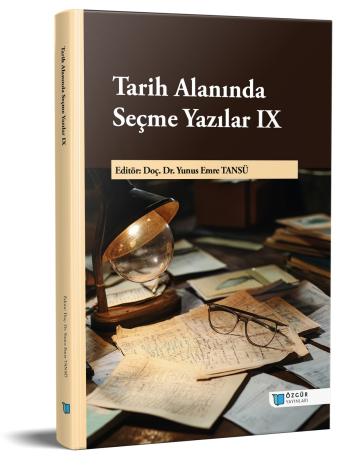
Charitable Institutions in Islamic and Jewish Traditions: An Assessment of the Waqf-Hekdesh Relationship
Chapter from the book:
Tansü,
Y.
E.
(ed.)
2025.
Selected Writings in the Field of History IX.
Synopsis
Although the waqf, one of the most important institutional structures of the Islamic world, has been the subject of an extensive body of scholarship throughout history, comparative studies addressing its relationship with similar charitable institutions in other religions and cultures have remained limited. This study aims to examine the Islamic waqf system and the institution of hekdesh, which holds an important place in the Jewish tradition, from a comparative perspective, and to reveal the similarities and differences between the charitable concepts of these two traditions. The concepts of waqf and hekdesh are analyzed in their historical, legal, and socio-economic dimensions, and it is demonstrated that these institutions do not merely share conceptual similarities, but also display significant parallels in terms of charitable motivation, institutional functioning, and social roles. The research demonstrates that the waqf and hekdesh institutions did not develop within a unidirectional relationship of influence, but rather within a framework of mutual cultural and social interaction. In this context, it is emphasized that neither structure was static; instead, both underwent transformations in response to changing social, economic, and political conditions. Nevertheless, clear divergences between the two traditions are observed, particularly with regard to family endowments, donation motivations, and conceptions of public benefit. Differences in legal and administrative practices further indicate that the boundaries and modes of implementation of hekdesh donations have at times given rise to disputes. The evaluation based on the example of the Kuhlani Synagogue concretizes the complex functioning of the hekdesh institution within its historical context and demonstrates how this structure responded to social needs. Ultimately, by addressing the waqf and hekdesh institutions within a comparative framework, this study fills a significant gap in the existing literature and offers a new ground for discussion in the fields of institutional history and comparative religious studies.
How to cite this book
License

This work is licensed under a Creative Commons Attribution-NonCommercial 4.0 International License.
Published
DOI
Categories
Copyright (c) 2025 Yunus Emre Tansü; Semiha Zehra Özharat- Ayhan Afşın Ünal- Ramazan Arslan- Yunus Emre Tansü- Filiz Sofuoğlu Babayev- Mehmet Kavak- Kürşat Çelik- Mustafa Tanrıverdi- Nejla Doğan