
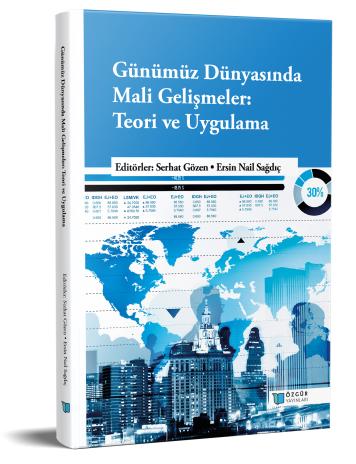
Fiscal Sustainability and Measurement Methods
Chapter from the book:
Gözen,
S.
&
Sağdıç,
E.
N.
(eds.)
2025.
Fiscal Developments in the Contemporary World: Theory and Practice.
Synopsis
Sustainability is a multifaceted concept with historical roots that extend far into the past. Its traces can be followed as far back as the Middle Ages and even to mythological sources. In economic thought, it is grounded in the doctrines of the physiocrats and has evolved to encompass the principle of meeting the needs of the present generation while considering the well-being of future generations. As a dynamic and continuously evolving construct, sustainability is subject to constant reinterpretation and adaptation. It is commonly conceptualized as resting on three foundational pillars: human, social, and natural resources. Within this tripartite framework, fiscal sustainability is situated under economic sustainability, which itself constitutes a core dimension of social sustainability. This study focuses on the concept of fiscal sustainability, defined as the government's ability to manage its finances in a manner that ensures the fulfillment of both current and future expenditure obligations. The analysis will explore the theoretical foundations, structural implications, and policy relevance of fiscal sustainability in the context of long-term public finance management.
How to cite this book
License

This work is licensed under a Creative Commons Attribution-NonCommercial 4.0 International License.
Published
DOI
Categories
Copyright (c) 2025 Serhat Gözen- Ersin Nail Sağdıç; Göksel Karaş- Hasan Hüseyin Aleçakır- Hatice Dayar- İlhan Korkmaz- Güner Tuncer- Ersin Nail Sağdıç- Fazlı Yıldız- Ebru Yalçın- Süleyman Emre Özcan- Özer Özçelik- Hatice Arslanparçası- Serhat Gözen- Ebru Karaş- Fatma Alkan- Gülistan Altıok- Meltem İrteş Gülşen - Betül Hayrullahoğlu