
The Effect of Direct and Indirect Taxes on Income Distribution in Türkiye
Chapter from the book:
Gözen,
S.
&
Sağdıç,
E.
N.
(eds.)
2025.
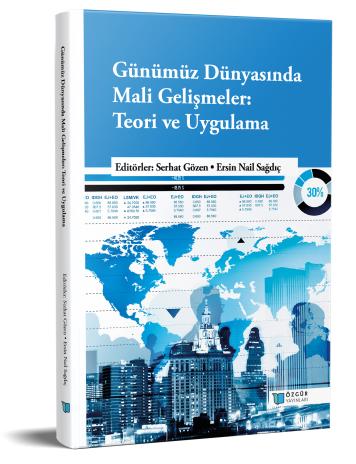
Fiscal Developments in the Contemporary World: Theory and Practice.
Synopsis
The fair distribution of income is a highly important issue in terms of social welfare. The distribution of income under market conditions often differs from the distribution desired by society. Therefore, income is subject to redistribution by the state. In this process, which refers to secondary income distribution, the most important policy tool of the state is taxation. The characteristics and types of taxes differentiate their effects on income distribution. Theoretically, while direct taxes levied on income and wealth have an improving effect on income distribution; indirect taxes levied on expenditures can negatively affect income distribution. The study aims to determine the relationship between direct and indirect taxes and income distribution in Türkiye between 1994 and 2023. The Autoregressive Distributed Lag (ARDL) Bounds Testing approach was employed in the analysis. The findings indicate that, in the long run, direct taxes have a positive effect on income distribution, while indirect taxes have a negative effect. However, in the short run, both direct and indirect taxes were found to have negative effects on income distribution.
How to cite this book
License

This work is licensed under a Creative Commons Attribution-NonCommercial 4.0 International License.
Published
DOI
Categories
Copyright (c) 2025 Serhat Gözen- Ersin Nail Sağdıç; Göksel Karaş- Hasan Hüseyin Aleçakır- Hatice Dayar- İlhan Korkmaz- Güner Tuncer- Ersin Nail Sağdıç- Fazlı Yıldız- Ebru Yalçın- Süleyman Emre Özcan- Özer Özçelik- Hatice Arslanparçası- Serhat Gözen- Ebru Karaş- Fatma Alkan- Gülistan Altıok- Meltem İrteş Gülşen - Betül Hayrullahoğlu