
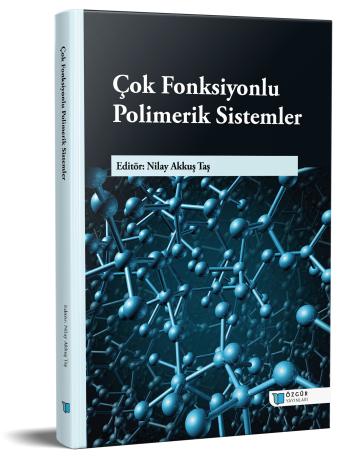
Biopolymer-Based Functional Materials: Structural Design, Applications, and Future Perspectives
Chapter from the book:
Akkuş Taş,
N.
(ed.)
2025.
Multifunctional Polymeric Systems.
Synopsis
If you want to understand why materials science is so dynamic today, you only need to look at biopolymer-based materials. Thanks to their sustainability, biocompatibility, and versatility, this field is expanding rapidly. Whether natural, microbial, or chemically modified, these materials offer flexible chemical architectures that open the door to a wide range of engineering applications. Natural sources such as cellulose, chitosan, alginate, and hyaluronic acid stand out for both their mechanical strength and biodegradability, while microbial polyesters, such as PHB and other PHA derivatives, are emerging as powerful alternatives to conventional plastics. Similarly, microbial polysaccharides and pigment–protein complexes address a wide range of biomedical and environmental challenges.
Transforming these raw materials into functional products is the most critical part of the process. Advanced techniques such as crosslinking, nanocomposite fabrication, electrospinning, cryogelation, and 3D or 4D bioprinting play key roles in this context. Through these methods, it becomes possible to design structures that are not only mechanically robust but also responsive to their surroundings, highly porous, and even self-healing. As a result, these technologies are now successfully used in numerous areas—from tissue scaffolds and innovative wound dressings to drug delivery systems, biodegradable packaging, heavy-metal remediation, and flexible sensors.
Although current research is heavily focused on nanocomposite hydrogels and intelligent polymer systems, challenges such as scalable production, cost efficiency, and standardization remain. Nevertheless, biopolymers continue to stand at the intersection of nature and advanced technology, making them one of the strongest candidates to define the innovative solutions of the future.
How to cite this book
License

This work is licensed under a Creative Commons Attribution-NonCommercial 4.0 International License.
Published
DOI
Categories
Copyright (c) 2025 Nilay Akkuş Taş; Mustafa Ersin Pekdemir- Serpil Yalçın Kuzu- Sibel Selçuk Pekdemir- Umut Çelikoğlu- Recep Taş- Hüseyin Akbaş- Derya Kahraman Döğüşcü- Nilay Akkuş Taş- Nihal Deligönül