
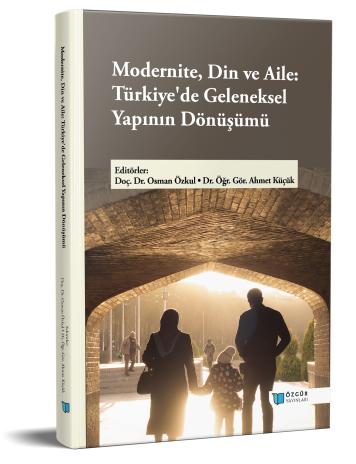
The Effects of Eating Together and Table Culture on Familial and Social Closeness and Similarity
Chapter from the book:
Özkul,
O.
&
Küçük,
A.
(eds.)
2025.
Modernity, Religion, and Family: The Transformation of Traditional Structure in Türkiye.
Synopsis
This chapter offers a comprehensive analysis of the historical, cultural, biological, and psychological dimensions of eating together, while examining the impact of growing individualization in modern societies on traditional table culture. It argues that communal meals are not merely nutritional practices but function as multilayered social institutions that nurture familial closeness, strengthen social cohesion, and preserve cultural continuity. Contemporary lifestyle patterns such as fast-paced living, fast food consumption, mall-centered eating habits, and digital distraction have progressively weakened the spiritual, cultural, and communal aspects of eating. Scientific research, however, demonstrates that shared meals increase microbiota similarity, regulate stress-related hormones, enhance psychological well-being, and improve family communication. Principles derived from the Prophetic tradition (sunnah) regarding food etiquette provide a meaningful framework for revitalizing communal values, fostering generosity and gratitude, and reinforcing social bonds. By highlighting the biological, emotional, and cultural costs of eating alone, this chapter underscores the role of communal dining as a restorative human practice capable of countering alienation, rebuilding social solidarity, and fostering holistic well-being.
How to cite this book
License

This work is licensed under a Creative Commons Attribution-NonCommercial 4.0 International License.
Published
DOI
Categories
Copyright (c) 2025 Osman Özkul- Ahmet Küçük; Osman Özkul- Fatma Göl- Nurenda Coşkun- Yasemin Yaşar- Abdullah Adıgüzel- İlhan Karaca- Zeynep Toprak- Fatih Aydın- Ahmet Küçük- İbrahim Kaygusuz- Hakkı Kalaycı- İshak Torun