
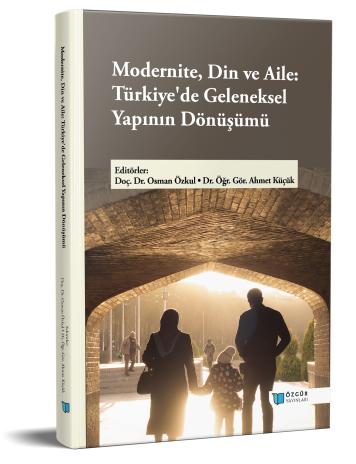
Family in a Changing World and Singleness as a New Norm of Life
Chapter from the book:
Özkul,
O.
&
Küçük,
A.
(eds.)
2025.
Modernity, Religion, and Family: The Transformation of Traditional Structure in Türkiye.
Synopsis
This study examines the social and cultural significance of singleness as an emerging lifestyle in the modern age. In today’s era of rapid scientific and technological advancement, individuals’ value systems, conceptions of happiness, and ways of life have undergone profound transformation. The secular, pleasure-oriented, and performance-driven lifestyle of modernity has weakened the institution of the family, leaving individuals to face loneliness, alienation, and identity crises. Popular culture and consumer ideology redefine happiness through instant gratification, visibility, and material success, thereby dissolving family bonds and elevating individual freedom to an absolute value. In contrast, Islamic thought regards the family as a fundamental refuge and a primary space for moral and spiritual development. Within this context, the rising “norm of singleness” represents both a quest for personal autonomy and a consequence of social, economic, and moral transformation. When evaluated through Said Nursi’s perspective, singleness is not portrayed as an absolute rejection of marriage but rather as a cautious and moral alternative to unsuitable unions. Ultimately, in the modern age, the concepts of family and singleness are deeply intertwined with the individual’s search for meaning, moral orientation, and sense of social belonging.
How to cite this book
License

This work is licensed under a Creative Commons Attribution-NonCommercial 4.0 International License.
Published
DOI
Categories
Copyright (c) 2025 Osman Özkul- Ahmet Küçük; Osman Özkul- Fatma Göl- Nurenda Coşkun- Yasemin Yaşar- Abdullah Adıgüzel- İlhan Karaca- Zeynep Toprak- Fatih Aydın- Ahmet Küçük- İbrahim Kaygusuz- Hakkı Kalaycı- İshak Torun