
For Whom is LGBTQA+ An Evaluation of the Movement in Terms of Türkiye and the Family Structure in Turkey
Chapter from the book:
Özkul,
O.
&
Küçük,
A.
(eds.)
2025.
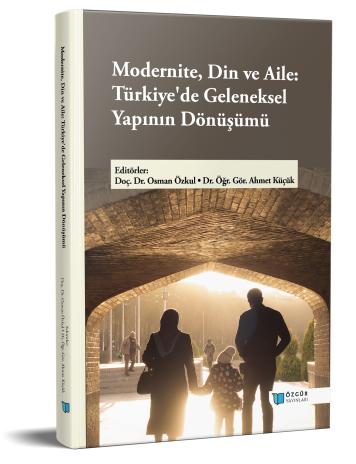
Modernity, Religion, and Family: The Transformation of Traditional Structure in Türkiye.
Synopsis
This chapter examines the social and political impacts of the LGBTİQA+ movement in Turkey, comparing them with the radical transformations created in Western societies. The study analyzes how the discourse of gender and LGBTİQA+ activism have led to a paradigm shift in the West, redefining legal and institutional systems. In Turkey, the movement has gained visibility in a limited sphere, but a large part of society perceives it as a "risk factor" threatening the traditional Turkish family structure. The academic literature addresses the movement through three main paradigms: cultural conflict, commodification within the framework of "pink capitalism”, and universal human rights. A critique is raised that Western-centric knowledge production globally coerces local knowledge systems into "epistemic obedience" through international power and academic systems. In Turkish politics, despite some indirectly positive developments in the early 2000s due to dynamics like the EU harmonization process, the long-standing ruling party is argued to pursue an ambivalent policy. While existence is permitted, the LGBTİQA+ issue is simultaneously used as an element of "moral panic" —a strategy to shift societal attention from economic problems to a moral "other" and consolidate conservative support. The heterosexual-based family structure in Turkey does not require an internally demanded "homonormativity" model, but rather necessitates inclusive policies. The chapter warns that the future of the LGBTİQA+ issue will be shaped not only by internal dynamics but also by international power relations and political discourse strategies.
How to cite this book
License

This work is licensed under a Creative Commons Attribution-NonCommercial 4.0 International License.
Published
DOI
Categories
Copyright (c) 2025 Osman Özkul- Ahmet Küçük; Osman Özkul- Fatma Göl- Nurenda Coşkun- Yasemin Yaşar- Abdullah Adıgüzel- İlhan Karaca- Zeynep Toprak- Fatih Aydın- Ahmet Küçük- İbrahim Kaygusuz- Hakkı Kalaycı- İshak Torun