
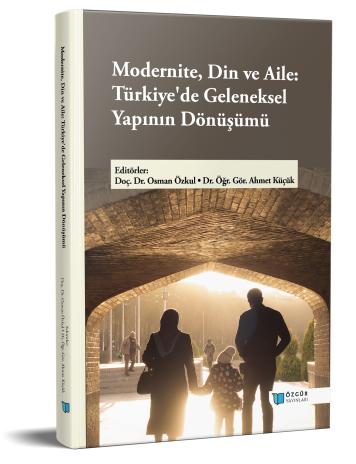
A Critique of the Factors Causing Role Changes in the Turkish Family
Chapter from the book:
Özkul,
O.
&
Küçük,
A.
(eds.)
2025.
Modernity, Religion, and Family: The Transformation of Traditional Structure in Türkiye.
Synopsis
This article critically examines the transformation of the Turkish family structure through three key dynamics: legal reforms during the EU harmonization process, the Istanbul Convention, and the rise of digital communication technologies. Rather than taking a neutral perspective, this study highlights controversial aspects such as societal resistance to legal changes, public debates surrounding gender equality policies, and the ambivalent impact of digital platforms on family interactions. The analysis reveals that while EU-led legal reforms aim to promote equality, their impacts vary across socioeconomic and regional contexts and sometimes exacerbate intergenerational and cultural tensions. Despite their intentions to protect women, the Istanbul Convention has triggered polarized reactions, shaping both men's and women's perceptions of family roles in complex ways. Digital communication technologies further complicate family dynamics by introducing privacy challenges, intergenerational conflicts, and new social pressures alongside increased opportunities for connection. By integrating legal, cultural, and technological perspectives, this article offers a critical understanding of the multifaceted and sometimes contradictory processes affecting contemporary Turkish family life.
How to cite this book
License

This work is licensed under a Creative Commons Attribution-NonCommercial 4.0 International License.
Published
DOI
Categories
Copyright (c) 2025 Osman Özkul- Ahmet Küçük; Osman Özkul- Fatma Göl- Nurenda Coşkun- Yasemin Yaşar- Abdullah Adıgüzel- İlhan Karaca- Zeynep Toprak- Fatih Aydın- Ahmet Küçük- İbrahim Kaygusuz- Hakkı Kalaycı- İshak Torun