
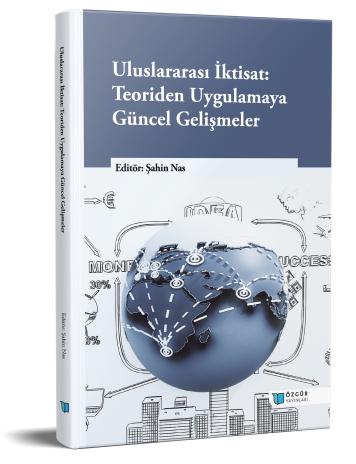
Trade Openness and Environmental Pressure: An Empirical Examination of the Pollution Haven Hypothesis in Developing Countries
Chapter from the book:
Nas,
Ş.
(ed.)
2026.
International Economics: Current Developments from Theory to Practice.
Synopsis
This study empirically investigates the relationship between trade openness and environmental pressure in developing countries, with a particular focus on the Pollution Haven Hypothesis (PHH). The analysis is based on a balanced panel dataset covering ten developing economies—Türkiye, Mexico, Brazil, South Africa, Indonesia, Malaysia, Thailand, the Philippines, Egypt, and Morocco—over the period 1990–2023. Environmental pressure is proxied by total CO₂ emissions excluding land-use, land-use change, and forestry (LULUCF), while trade openness is measured as the ratio of total trade to GDP. The model controls for income per capita, energy consumption, urbanization, and foreign direct investment.
Fixed-effects panel estimations are employed to account for unobserved country-specific heterogeneity. Alternative specifications incorporate year fixed effects to capture global economic conditions and common shocks. The results indicate that trade openness has a positive and statistically significant effect on CO₂ emissions when year effects are excluded, supporting the Pollution Haven Hypothesis. However, once global time effects are included, the impact of trade openness becomes statistically insignificant, suggesting that the trade–environment nexus is largely shaped by global dynamics rather than domestic factors alone.
Income per capita and energy consumption remain positive and statistically significant determinants of emissions across all specifications, highlighting the importance of economic scale and energy-intensive production structures in developing countries. Overall, the findings emphasize the need to incorporate global time dynamics into empirical analyses of trade and environmental outcomes.
How to cite this book
License

This work is licensed under a Creative Commons Attribution-NonCommercial 4.0 International License.
Published
DOI
Categories
Copyright (c) 2026 Şahin Nas; Ebru Arıcıoğlu- Pınar Tat- Nil Sirel Öztürk- Şahin Nas