
Lobatto Methods: A Study of Their Stability Characteristics
Şu kitabın bölümü:
Yakıt Ongun,
M.
(ed.)
2026.
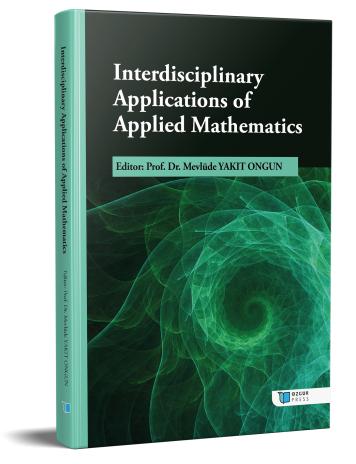
Interdisciplinary Applications of Applied Mathematics.
Özet
This chapter presents an overview of Lobatto-type Runge-Kutta schemes derived from Gauss–Lobatto quadrature formulas.Since the collocation nodes include both endpoints of the integration interval, these methods possess several advantageous stability and geometric properties.. Their key feature is that both endpoints of each integration step serve as collocation nodes. Throughout the chapter, the formulation processes, Butcher tableaus, and stability properties of five primary sub-classes (Lobatto IIIA, IIIB, IIIC, IIIC*, and Generalized Lobatto, Lobatto IIID) are detailed.
Linear stability is first examined via A-stability and L-stability. In this context, it is demonstrated that the corresponding stability functions reduce to specific Padé approximations of the exponential function. For non-linear dynamics, B-stability is analyzed. Through this analysis, The analysis reveals that: among the variants considered, only Lobatto IIIC is algebraically stable, which implies B-stability.
Furthermore, geometric integration aspects, such as symplecticity, P-stability, and energy behavior on the imaginary axis, are explored. It is established that a highly effective symplectic integrator is generated when Lobatto IIIA and IIIB methods are coupled into a partitioned system. To consolidate these theoretical derivations, visual plots of the stability regions and a comprehensive comparison table are provided at the end of the chapter.
Anahtar Kelimeler:
Kaynakça Gösterimi
Lisans

Bu çalışma Creative Commons Attribution-NonCommercial 4.0 International License ile lisanslanmıştır.
Yayın Tarihi
DOI
Kategoriler
Telif Hakkı (c) 2026 Mevlüde Yakıt Ongun; Mehmet Kocabıyık- Halil İbrahim Dönmez- Mehmet Onur Olgun- Sırma Zeynep Alparslan Gök- Çağnur Çörekli- Hatice Bulut Demiralay- Mehmet Uc- Fatih Rıza Çelik- Mevlüde Yakıt Ongun- Ceren Uysal- Fatma İşcan