
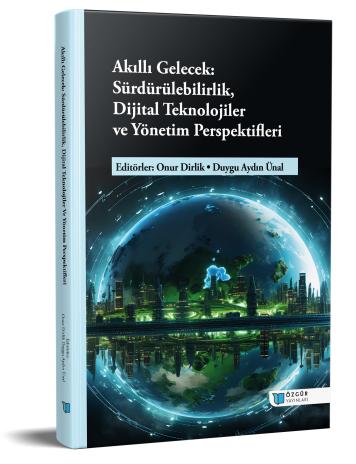
Sustainable Tourism from a Conceptual and Practical Perspective
Chapter from the book:
Dirlik,
O.
&
Aydın Ünal,
D.
(eds.)
2025.
Smart Future: Sustainability, Digital Technologies, and Management Perspectives.
Synopsis
This study aims to discuss the environmental, economic, and socio-cultural impacts of tourism activities within a holistic framework, addressing sustainable tourism from both a conceptual and practical perspective. Based on the sustainability approach established by the Brundtland report, the fundamental principles of sustainable tourism are outlined. At this point, under the heading of environmental sustainability, carbon emissions, energy and water consumption, loss of biodiversity, and climate change adaptation policies are evaluated in detail. The economic sustainability section discusses the impact of tourism revenues on the local economy, reducing leakage, seasonality, and resilience to crises. It also examines the relationship with local entrepreneurship, regional development, and employment quality. Within the scope of socio-cultural sustainability, social carrying capacity, local people's attitudes towards tourism, preservation of cultural heritage, maintaining authenticity, and inclusive tourism approaches are addressed. The study examines the concept of carrying capacity in tourism in its physical, environmental/ecological, and socio-psychological dimensions. It is noted that technological developments are an important strategic tool against the phenomenon of overtourism. However, it is stated that overtourism, climate change, economic fragility, lack of coordination among stakeholders, limited participation of the local community, and widespread greenwashing practices are structural problems that limit sustainability goals. The study argues that sustainable tourism can only be achieved through a holistic management approach that addresses not only environmental measures or technological solutions but also effective and inclusive stakeholder participation, long-term strategic planning, institutional capacity building, and social cohesion.
How to cite this book
License

This work is licensed under a Creative Commons Attribution-NonCommercial 4.0 International License.
Published
DOI
Categories
Copyright (c) 2025 Onur Dirlik- Duygu Aydın Ünal; Onur Dirlik- Yücel Türker- Duygu Aydın Ünal- Ceylan Alkan- Aslıhan Kıymalıoğlu