
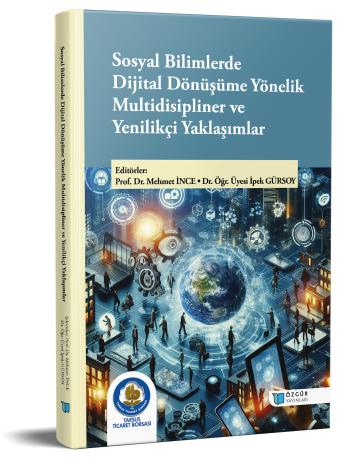
Evaluation of International Market Opportunities in Turkey’s Citrus Essential Oils Exports
Chapter from the book:
İnce,
M.
&
Gürsoy,
İ.
(eds.)
2025.
Multidisciplinary and Innovative Approaches to Digital Transformation in Social Sciences.
Synopsis
Trade has been one of the fundamental dynamics of economic and social development throughout human history. Especially with globalization, international markets have become increasingly integrated, and global trade volumes have expanded significantly. As a result, international markets—alongside domestic ones—have emerged as important alternatives, encouraging firms to seek new market opportunities. With digitalization, enhanced data collection capabilities have increased the richness of secondary data sources, while also making such data more frequently utilized in market research. The growing availability of data has led agricultural production and processed agricultural products to become more prominent subjects of research.
The focus of this study—citrus essential oils—is one of the processed agricultural products distinguished by its high value-added potential. Growing interest in healthy lifestyles and sustainability has increased global imports of citrus essential oils by 78.5% over the past decade, exceeding USD 2 billion. However, despite ranking among the world’s top five citrus producers, Turkey captured only a very small share of this market with exports amounting to USD 913 thousand in 2024. Moreover, Turkey runs a foreign trade deficit in this product group, as its imports exceed its exports. If supported by increased production capacity, identifying potential target markets to capture a larger share of this growing market becomes critically important.
This study investigates which countries stand out as target markets for the export of essential oils derived from citrus fruits through the analysis of secondary data. Within the scope of the study, data obtained from sources such as ITC Trademap, ITC MacMap, FAO, IFEAT, TURKSTAT, and sectoral reports are utilized to develop strategic market recommendations based on indicators including trade volume, import trends, tariff and non-tariff barriers, and unit prices. According to the research findings, the United States, Ireland, and Germany are identified as priority target markets for Turkey’s citrus essential oil exports. Existing strong trade relations with the United States and Germany, duty-free export opportunities to Germany and Ireland due to their EU membership and geographical proximity, recent additional tariffs imposed by the United States on certain importing countries, as well as the import volumes, growth trends, and unit import values of these three countries, constitute key factors that make them attractive markets for Turkey.
Given the limited production capacity, an e-export strategy focused on niche products may be considered a priority option for entering target markets. At the same time, it would be beneficial for policymakers, regional development agencies, and professional organizations to investigate the barriers hindering the expansion of citrus essential oil production in Turkey. By doing so, the citrus essential oil sector—supported by increased production capacity—would be better positioned to capitalize on the opportunities available in the potential markets identified in this study.
How to cite this book
License

This work is licensed under a Creative Commons Attribution-NonCommercial 4.0 International License.
Published
DOI
Categories
Copyright (c) 2025 Mehmet İnce- İpek Gürsoy; Ali Şükrü Çetinkaya- Zehra Alakoç Burma- Sibel Çevik- M. Sami Süygün- Pelin Albayrak Fakıoğlu- Senay Oğuztimur- Sinan Çavuşoğlu- Kazım Dağ- Sezen Bozyiğit- Gökçer Aydın- Şükran Dertli- Recep Bozkurt- Eyyüp Akyüz- Özlem İlhan- İlknur Hatice Geçim- Zafer Yıldırım- Turgay Yıldırım- Bensu Narin- Ata Kahveci