
An Analysis of Turkey’s Foreign Trade in Printing Inks: Target Market Analysis for Products Classified under HS Code 3215
Chapter from the book:
İnce,
M.
&
Gürsoy,
İ.
(eds.)
2025.
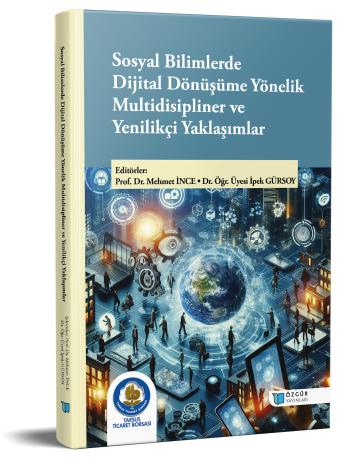
Multidisciplinary and Innovative Approaches to Digital Transformation in Social Sciences.
Synopsis
This study provides a comprehensive examination of the international trade structure of printing inks, writing and drawing inks, and other ink products classified under HS Code 3215, as well as Türkiye’s position within this sector. In recent years, global trade has been reshaped in line with digitalization, sustainability, and environmentally conscious production paradigms. This transformation has directly affected the printing inks sector, which constitutes an important branch of the chemical industry. The primary aim of the study is to identify Türkiye’s export potential, import dependency, and target market opportunities in this sector, thereby contributing to the development of foreign trade strategies.
The analysis utilizes ITC TradeMap data for the 2020–2024 period, and comparatively examines global trade volumes, growth rates, and country-based foreign trade balances. The findings reveal that, as of 2023, the product group classified under HS Code 3215 has reached an approximate global trade volume of USD 6.5 billion. Germany, China, and the United States rank among the leading exporting countries worldwide, while Türkiye has significantly increased its export volumes in markets such as Russia, Iraq, Germany, and Morocco. This trend indicates that Türkiye is strengthening its effectiveness in regional trade and gaining competitive power in global markets.
Nevertheless, a key structural weakness of the sector lies in its high dependency on imported high-technology raw materials. Inputs such as organic pigments, resins, and solvents are largely imported, which increases production costs and limits competitive advantage. At the same time, Türkiye’s logistical location, well-developed transportation infrastructure, and Customs Union membership provide significant advantages in terms of market access.
In addition, the green transformation underway in the global printing industry presents both risks and opportunities for Türkiye. Within the framework of the European Green Deal, compliance with environmental criteria in production and export processes has become mandatory. In this context, the transition toward environmentally friendly ink types—such as water-based inks and inks with low volatile organic compound (VOC) content—is of critical importance for maintaining Türkiye’s competitiveness in the EU market. Supporting R&D investments aimed at this transformation, modernizing production infrastructure, and promoting environmental certification processes will contribute to the sector’s sustainable growth.
Furthermore, branding efforts, participation in international trade fairs, and digital promotion activities are key factors that can enhance the global visibility of Turkish ink manufacturers. Strengthening technological production capacity, developing innovation-oriented products, and shifting toward high value-added production will enable Türkiye to achieve a stronger position in both regional and global trade. Overall, this study emphasizes—based on data-driven analyses—that Türkiye needs to adopt a sustainable, innovative, and competitive growth model in its foreign trade of printing inks.
How to cite this book
License

This work is licensed under a Creative Commons Attribution-NonCommercial 4.0 International License.
Published
DOI
Categories
Copyright (c) 2025 Mehmet İnce- İpek Gürsoy; Ali Şükrü Çetinkaya- Zehra Alakoç Burma- Sibel Çevik- M. Sami Süygün- Pelin Albayrak Fakıoğlu- Senay Oğuztimur- Sinan Çavuşoğlu- Kazım Dağ- Sezen Bozyiğit- Gökçer Aydın- Şükran Dertli- Recep Bozkurt- Eyyüp Akyüz- Özlem İlhan- İlknur Hatice Geçim- Zafer Yıldırım- Turgay Yıldırım- Bensu Narin- Ata Kahveci