
Sustainability Reporting in the Context of International Trade: A Theoretical Review
Chapter from the book:
İpek,
E.
&
İpek,
Ö.
(eds.)
2025.
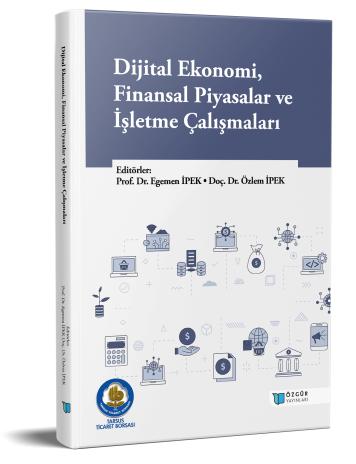
Digital Economy, Financial Markets, and Business Studies.
Synopsis
Sustainability reporting in international trade has become a strategic necessity for firms amid the growing global importance of environmental, social, and governance (ESG) criteria. Particularly for Turkish exporting firms competing in international markets, sustainability is not merely an element of corporate reputation; it is also regarded as a key determinant of long-term market access, trust in supply chain relationships, operational efficiency, and financial sustainability. The primary aim of this study is to examine, from a theoretical perspective, the role of sustainability reporting in the internationalization process of exporting firms in Türkiye—especially small and medium-sized enterprises (SMEs)—and to provide a conceptual assessment within this framework. Accordingly, the effects of sustainability reporting are addressed holistically across sectors that are critical to foreign trade, such as energy, textiles, automotive, and agriculture.
The study employs Stakeholder Theory, Legitimacy Theory, the Corporate Social Responsibility (CSR) approach, and the Integrated Reporting perspective to reveal the multidimensional nature of sustainability reporting. Within the context of Stakeholder Theory, reporting is conceptualized as a responsibility toward global supply chain actors, while from the perspective of Legitimacy Theory, it is evaluated as a tool for gaining acceptance and maintaining commercial presence in international markets. Furthermore, the study emphasizes that CSR and Integrated Reporting approaches constitute strategic necessities for exporting firms. This integrated framework directly aligns with the United Nations Sustainable Development Goals (SDGs), enhances firms’ levels of environmental awareness, and contributes positively to Türkiye’s achievement of these global objectives.
In the Turkish context, incentive and support mechanisms provided by institutions such as KOSGEB, TÜBİTAK, the Ministry of Trade, the Ministry of Industry and Technology, and the Ministry of Environment, Urbanization, and Climate Change accelerate the green and digital transformation of SMEs. From a global supply chain management perspective, sustainability reporting establishes transparency and trust among suppliers, logistics service providers, financial institutions, and public authorities, thereby strengthening Türkiye’s alignment with the Middle Corridor logistics strategies, green supply chain objectives, and the European Green Deal.
In conclusion, Türkiye should publish sector-specific sustainability guidelines, support reporting processes through digital platforms, facilitate access to green transformation finance, and develop tailored support mechanisms. Moreover, expanding sustainability education, consultancy, and awareness-raising activities through university–industry collaboration will enhance the international competitiveness of exporting SMEs and directly contribute to the country’s sustainable growth objectives in global trade.
How to cite this book
License

This work is licensed under a Creative Commons Attribution-NonCommercial 4.0 International License.
Published
DOI
Categories
Copyright (c) 2025 Egemen İpek- Özlem İpek; Gökhan Berk Özbek- Ahmet Koluman- Fatih Kaplan- Yıldız Hoşgör- Nilüfer Yücedağ Erdinç- Emrah Eray Akça- Ayşegül Han- Turgay Yıldırım- Zafer Yıldırım- Saffet Akdağ- Ayşe Akboz Caner - Ayşe Ergin Ünal- Sinan Çavuşoğlu- Özlem Doğan- Mehmet Ali Ekinci- Sevil Özen- Kemal Eyüboğlu- Senem Gazi- Ulaş Buz- Mehtap Delioğlu- Burcu Karaca- Ali Çımat- Sinem Eyüboğlu- Nurten Çakar- Ömer Arı- Erkan Uzun