
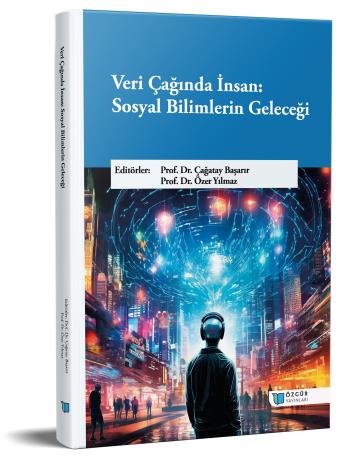
The Theoretical Relationship Between Technostress and Burnout in the Data Age
Chapter from the book:
Başarır,
Ç.
&
Yılmaz,
Ö.
(eds.)
2025.
Human in the Data Age: The Future of Social Sciences.
Synopsis
In the data-driven era where digitalization is accelerating, employees' interaction with technology has significant implications not only for productivity and work processes but also at psychological and cognitive levels. This study comprehensively examines the theoretical relationship between technostress, defined as psychological strain arising from the use of information and communication technologies, and burnout, which results from prolonged exposure to stress.
Technostress emerges from stressors such as technological overload, violation of work–life boundaries, system complexity, technological insecurity, and uncertainty, depleting employees' cognitive and emotional resources. In parallel, burnout becomes more complex in digital work environments, manifesting in dimensions of emotional exhaustion, depersonalization, and reduced personal accomplishment.
The study explains the technostress–burnout relationship within the framework of the Job Demands-Resources Model and the Conservation of Resources Theory, emphasizing how increased digital demands threaten employee well-being. Furthermore, the rise of remote work, the necessity of being constantly online, and digital surveillance practices during the COVID-19 pandemic have made the effects of technostress more visible, paving the way for the emergence of new forms of burnout, such as "digital burnout" and "algorithmic burnout."
However, organizational and individual resources have a regulatory effect on this negative process. Technical support, digital competency training, workload management, user-friendly system design, psychological safety climate, and digital boundary-setting skills emerge as critica l buffer mechanisms that reduce the transformation of technostress into burnout. Ultimately, the study highlights the impact of digital labor processes on employee psychology and provides a theoretical foundation for sustainable digital work design.
How to cite this book
License

This work is licensed under a Creative Commons Attribution-NonCommercial 4.0 International License.
Published
DOI
Categories
Copyright (c) 2025 Çağatay Başarır- Özer Yılmaz; Nur Kuban Torun- Merve Önalan- Ömer Faruk Seymen- Volkan Akgül- Müjde Aksoy- Özer Yılmaz- Burçin Boz- Mehtap Türkan- Özgür Yılmaz- İlknur Tanrıverdi- Altuğ Günar- Çağatay Başarır- Cemalettin Hatipoğlu- Onur Özaydın