
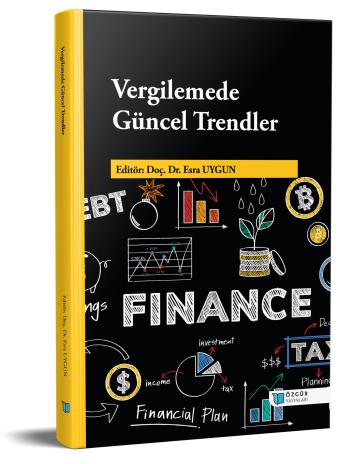
The Transformative Role of Legislative Processes in Achieving Tax Harmonization in The European Union
Chapter from the book:
Uygun,
E.
(ed.)
2025.
Current Trends in Taxation.
Synopsis
The European Union (EU) has undergone a shift towards comprehensive reforms in its taxation policies, concomitant with the deepening of economic integration. Although taxation constitutes a fundamental element of member states' fiscal sovereignty, the necessity for harmonization at the EU level has emerged to ensure the effective functioning of the single market and the preservation of competition. The present article examines the relationship between EU tax policies and legislative processes, particularly in the context of sovereignty debates and harmonization efforts. The initial phase of the study involves an examination of the theoretical relationship between taxation, sovereignty, and citizenship. Subsequently, the study moves on to an evaluation of the functioning of legislative processes in the EU and decision-making mechanisms in the field of taxation. The findings of the study indicate that harmonization efforts have yielded relatively successful outcomes in indirect taxes, particularly Value Added Tax. However, progress has been constrained in direct taxes, such as income and corporate taxes, due to the unanimity requirement and the prioritization of national interests. Consequently, the EU's endeavor to strike a balance between the fiscal sovereignty of member states and the operational integrity of the common market in its tax policies has exposed the limitations of the integration process and the necessity for prospective reforms.
How to cite this book
License

This work is licensed under a Creative Commons Attribution-NonCommercial 4.0 International License.
Published
DOI
Categories
Copyright (c) 2025 Esra Uygun; Orçun Avcı- Hüseyin Akkaya- Birol Ubay- Sebiha Yıldız- Selçuk Buyrukoğlu- Yasemin Arıman- Ali Saklan- Osman Kağan Ergür- Rabia Tuğba Eğmir