
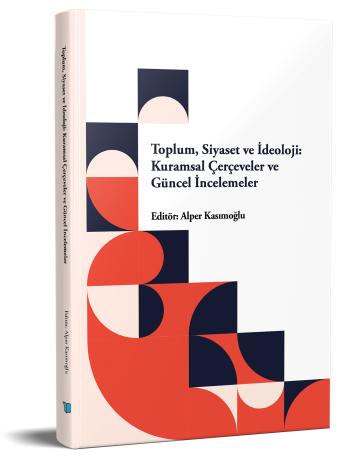
Deepfake Technology and the Crisis of Political Trust: Sociological Implications of Disinformation in Election Processes
Chapter from the book:
Kasımoğlu,
A.
(ed.)
2025.
Society, Politics and Ideology: Theoretical Frameworks and Contemporary Analyses.
Synopsis
The digital communication ecosystem of the 21st century has reached an epistemological breaking point with the rise of AI-based synthetic media production technologies, specifically the deepfake phenomenon. This study examines the multi-layered effects of deepfake technology—which began with Generative Adversarial Networks (GANs) in 2014 and has reached a hyper-realistic level with Diffusion Models today—ranging from its technical infrastructure to its societal consequences. The focus of the research is on the corrosive effects of visual and auditory disinformation used in election processes on democratic legitimacy, political trust, and collective memory. Grounded within the framework of Jean Baudrillard’s theory of simulacra and Jürgen Habermas’s concept of the public sphere, the sociological analysis reveals how voter perception is manipulated in the post-truth age, where fact and fiction have become indistinguishable. In light of empirical data and case analyses from elections in Slovakia (2023), India (2024), the USA (2024), and Turkey (2023), the study discusses the concept of the "liar’s dividend," scrutinizing how politicians utilize this technology not only as an offensive tool but also as a defensive shield to cover up genuine scandals. Furthermore, findings regarding the potential for media literacy training to paradoxically increase cynicism and institutional distrust (the backfire effect) are addressed. Consequently, by discussing the inadequacies of current legal regulations under the European Union AI Act and the Turkish Penal Code, a hybrid solution model integrating technological detection mechanisms (C2PA) with sociological resilience strategies is proposed.
How to cite this book
License

This work is licensed under a Creative Commons Attribution-NonCommercial 4.0 International License.
Published
DOI
Categories
Copyright (c) 2025 Alper Kasımoğlu; Ali Kiriktaş- Gamze Erdoğan- İlyas Erdoğan- Erhan Örselli- Zekeriya Bilici- Emre Feyzi Çolakoğlu- Sinem Yüksel Çendek- Alper Kasımoğlu