
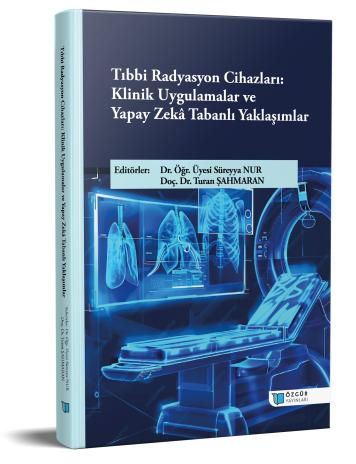
Medical Radiation Devices: Clinical Applications and AI-Based Approaches
Synopsis
Artificial intelligence (AI) has been rapidly adopted across multiple fields of medicine and has demonstrated substantial potential particularly in clinical practice for improving patient care, enabling earlier disease detection, and optimizing treatment processes. AI has emerged as a powerful tool in imaging analysis, clinical decision support systems, patient monitoring, and personalized treatment strategies. However, several ethical, technical, and safety challenges must be addressed to ensure its successful implementation in clinical settings.
Once integrated into routine clinical use, AI may substantially reshape patients’ diagnostic and therapeutic pathways. It supports the development of clinical decision support systems and is used effectively to generate personalized treatment plans. By analyzing patient data, AI can perform risk stratification and inform treatment strategies. In oncology in particular, AI-driven analysis of imaging and genomic data can facilitate the selection of appropriate treatment plans, thereby significantly improving clinical workflows and outcomes. AI is also an effective tool for longitudinal patient follow-up; for example, evaluating treatment response and monitoring disease courses in patients with cancer can be performed with greater precision using AI algorithms.
This book provides a holistic overview of the technological transformation occurring in medical imaging, nuclear medicine, and radiotherapy, with a particular focus on AI applications. The integration of AI-based approaches into diagnosis, treatment planning, dosimetry, and quality control within the disciplines of health physics and medical imaging is examined in the context of current literature and clinical practice. The impact of AI-assisted measurement, dosimetry, and quality assurance/quality control (QA/QC) applications on patient safety, accuracy, and standardization is emphasized. In addition, the contributions of AI to contouring one of the most critical steps in radiotherapy treatment planning are discussed, particularly with respect to time savings, reduced user dependence, and improved planning quality. AI-based methods in brachytherapy and in automated treatment planning systems (ATPS) are also comprehensively evaluated, including their role in dose distribution optimization and integration into clinical workflows.
Overall, this book aims to serve as an up-to-date and comprehensive reference for both academic and clinical audiences by examining the opportunities offered by AI in medical imaging and therapeutic processes from an interdisciplinary perspective.
The book covers topics such as radiation-producing devices used in medicine; AI applications in medical imaging; factors affecting image quality and image optimization in hybrid nuclear medicine imaging; technological transformation through hybrid and digital systems; AI-assisted measurement, dosimetry, and quality control; AI in radiotherapy treatment-planning contouring; and AI in brachytherapy and automated treatment planning systems (ATPS).
Chapters
How to cite this book
License

This work is licensed under a Creative Commons Attribution-NonCommercial 4.0 International License.
Published
ISBN
DOI
Statistics
Categories
Copyright (c) 2025 Süreyya Nur- Turan Şahmaran; Süreyya Nur- Feryal Çakır- Turan Şahmaran- Esil Kara- Hikmettin Demir- Telat Aksu- Mehmet Hakan Doğan