
The Rise of Populist Ideologies and International Migration
Chapter from the book:
Arslan,
E.
&
Deniş,
H.
E.
&
Çiçek,
A.
(eds.)
2025.
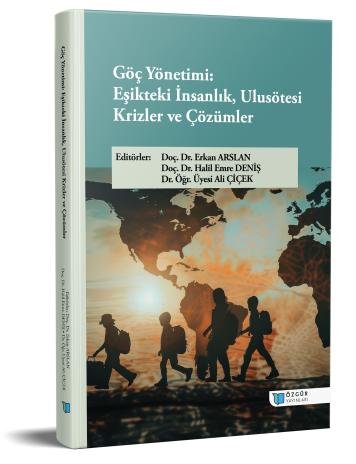
Migration Management: Humanity at the Threshold, Transnational Crises, and Solutions.
Synopsis
This study offers a theoretical framework for understanding how accelerating patterns of transnational migration have contributed to the rise and consolidation of populist ideologies in twenty-first-century politics. Migration dynamics driven by wars, environmental disasters, economic inequalities, and authoritarian repression have not only generated demographic and socio-economic consequences, but have also created a political arena in which ideological formations and public discourses are increasingly reconfigured. In this context, the growing visibility of populism reveals how migration becomes embedded in polarizing narratives that reshape political competition and societal cleavages. Populism, grounded in an antagonistic relationship between “the people” and “the elites,” can manifest across the ideological spectrum; however, the recent prominence of right-wing populist movements has intensified anti-immigrant rhetoric and expanded cultural threat perceptions centered on national identity. Migrants are The primary aim of this article is to theorize the role of transnational migration in the rise of populist ideologies by examining how populist actors instrumentalize migration within political discourse, which ideological elements they mobilize, and how such narratives become hegemonic in national political arenas. The central research question asks: how is transnational migration subjected to a process of instrumentalization in populist political discourse? The study advances the hypothesis that transnational migration is strategically framed by populist ideologies through references to national identity, cultural threat, and security anxieties, reinforcing the people–elite antagonism that lies at the core of populist logic. Methodologically, the study adopts a qualitative, theory-driven approach that draws on key conceptual tools in the populism and migration literature. It foregrounds analytical categories such as the people–elite dichotomy, threat perception, nationhood and identity construction, and exclusionary citizenship regimes. By addressing the relative scarcity of in-depth theoretical work on the interaction between transnational migration and populist ideologies (beyond predominantly European, case-based empirical accounts) this study aims to contribute to both political ideology theory and migration studies, positioning migration not merely as a sociological phenomenon but as a central instrument in contemporary ideological contestation.
How to cite this book
License

This work is licensed under a Creative Commons Attribution-NonCommercial 4.0 International License.
Published
DOI
Categories
Copyright (c) 2025 Erkan Arslan- Halil Emre Deniş- Ali Çiçek; Erkan Arslan- Halil Emre Deniş- Fatih Demircioğlu- Ali Çiçek- Aslıhan Çiçek- Abdullah Turan- Abdulkadir Yüksel- Ömer Nabi Baykal- Didem Kayahan Yüksel - Pervin Bozkurt- Ömer Yılmaz- Fatime Gül Oktay Atsatan- Mustafa Uzan- Tolgay Ercan