
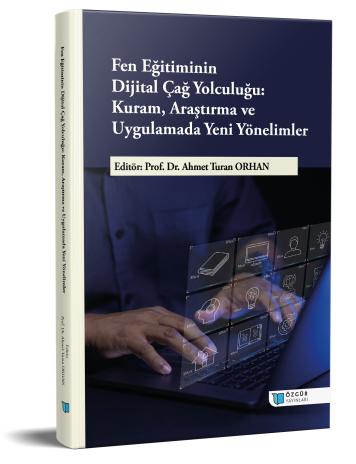
Digital Science Learning Ecosystems in the Context of Sustainability Education
Chapter from the book:
Orhan,
A.
T.
(ed.)
2025.
The Journey of Science Education in the Digital Age: New Directions in Theory, Research, and Practice.
Synopsis
This study provides an in-depth examination of the theoretical and practical dimensions of Digital Science Learning Ecosystems (DSLEs) within the context of sustainability education. Grounded in the epistemological shift and paradigm change driven by digital transformation in science education, the analysis focuses on the critical role DSLEs play in achieving the Sustainable Development Goals (SDGs). DSLEs are conceptualized as a digital-age extension of Bronfenbrenner’s ecological systems theory and are framed through theoretical perspectives such as Connectivism, Constructivism, and Systems Thinking.
The pedagogical applications of DSLEs demonstrate how virtual laboratories, artificial intelligence (AI)-supported adaptive learning systems, and augmented or virtual reality tools foster students’ action-oriented knowledge and ethical responsibility skills. The study details how learners develop twenty-first-century competencies, such as data literacy and systems thinking, through engagement with authentic datasets. These ecosystems not only support students in acquiring knowledge but also cultivate their development as active and responsible digital citizens.
Trends in the literature highlight a shift from short-term knowledge acquisition toward long-term sustainable behavior change, while also drawing attention to ethical and privacy concerns associated with Learning Analytics (LA). The conclusion section provides concrete implications for policymakers regarding curriculum integration, teacher competencies (particularly within the DiKoLAN digital competence framework), and ethical data governance. Future research directions include longitudinal impact studies and investigations into behavior tracking supported by learning analytics. Overall, this work reveals the transformative potential of DSLEs in advancing science education toward a more sustainable future.
How to cite this book
License

This work is licensed under a Creative Commons Attribution-NonCommercial 4.0 International License.
Published
DOI
Categories
Copyright (c) 2025 Ahmet Turan Orhan; Erhan Ceylan- Özgür Özünlü- Oktay Göktaş- Selda Bakır- Ekrem Dağ- Kevser Şentürk- Ayberk Bostan Sarıoğlan- Esra Sayar- Erdem Gencal- Hasan Genç- Huriye Deniş Çeliker