
The EU's New Migration Pact and Turkey's Position: Opportunities, Risks and Adaptation Needs
Chapter from the book:
Atalay Şimşek,
S.
&
Karhan,
G.
(eds.)
2025.
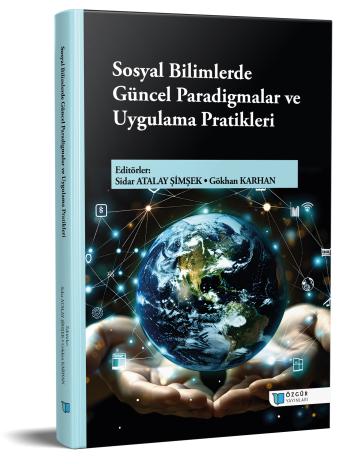
Current Paradigms and Practical Applications in Social Sciences.
Synopsis
The European Union's New Migration and Asylum Pact is a comprehensive reform package aimed at making migration management faster, more cooperative, and more harmonized among member states. This study aims to analyze the opportunities, risks, and adaptation requirements that the Pact presents for Turkey. The main objective of the study is to provide a comprehensive assessment of the future of migration-related cooperation between Turkey and the EU and to identify Turkey's policy options, needs, and risks. A literature review was used as the methodology for the study. It also examines Turkey's current migration management framework, implementation process, and institutional cooperation mechanisms with the EU. The study's significance stems from the fact that the New Migration Pact also has implications for transit and destination countries like Turkey, which are in close cooperation with the EU. For Turkey, the continuation of financial support, the strengthening of cooperation, and the development of institutional structures present significant opportunities. However, expectations regarding burden sharing, the expansion of the scope of responsibility, and human rights-based criticisms also create areas of risk. In this context, the study highlights the necessity for Turkey to develop a sustainable and rights-based policy framework in order to align with the New Pact.
How to cite this book
License

This work is licensed under a Creative Commons Attribution-NonCommercial 4.0 International License.
Published
DOI
Categories
Copyright (c) 2025 Sidar Atalay Şimşek- Gökhan Karhan; Makbule Şiriner Önver- Günay Gönüllü- Ayşegül Kanbak- Merve Öztürk- Nihal Şirin Pınarcıoğlu Ocakhan- Hamdullah Dönmez- Zeynep Karhan- Hamza Şimşek- Seda Özcan- Esat Atalay- Nalan Altun